




Quick delivery: 2-4 days
Free shipping to parcel shop above 140 €
We support Plant A Tree

Rooster - Wooden figure in beech wood

Wood & Care

WAC-11808


Room for imagination
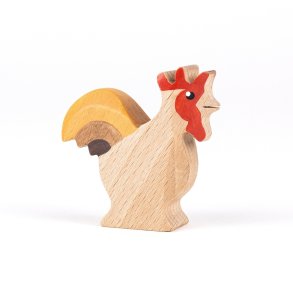
Toys do not need to be painted down to the smallest detail. This sweet wooden rooster is a heartwarming addition to any collection of wooden figures. The figure is beautifully crafted with a finely carved tail and a painted area that highlights the rooster's red comb and beak.

The body appears in natural wood, where the beautiful grain stands out nicely and gives every single figure its very own unique character. A small discreet, painted eye gives the little rooster plenty of personality and life.

The wooden figure is robustly built and created with soft, rounded edges. This makes it extremely comfortable and safe to hold for small hands that love to invent stories and play farm. When the rooster needs a rest from playing, it stands stably and looks incredibly beautiful as a decoration on a windowsill, shelf or bookcase.

The conscious choice of a simple expression leans on the aesthetics known from the Waldorf tradition, where the child is allowed to use their own imagination. Is the rooster happy and crowing loudly, or is it busy looking after the flock of hens? That is entirely up to the game in the moment.

Handmade and completely unique
The figure is carved in solid beech wood in a small family-owned workshop in Poland. Even though the rooster is partially painted, the natural wood grain still stands out on the figure.

Since each animal is made and painted by hand, there will always be small differences from rooster to rooster. The 1.7 cm thick figure stands stably on its own and can easily be included in a farm environment or on a nature table.


6.30 €
Show product

Hens - Wooden figures in beech wood

Wood & Care

WAC-11679


Room for imagination
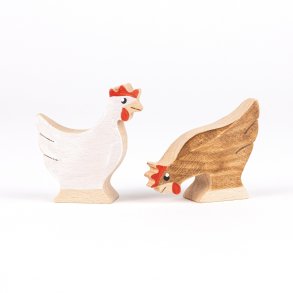
Toys do not need to be painted down to the smallest detail. This sweet set of two hens is a heartwarming addition to any collection of wooden figures. The figures are designed with grooves that mimic wings, and simple painted areas that highlight the hens' red combs, beaks, and plumage.

The lower part of the body appears in natural wood, where the beautiful grain stands out nicely and gives every single figure its very own unique character. The small discreet, painted eyes give the hens plenty of personality and life.

The wooden figures are robustly built and created with soft, rounded edges. This makes them extremely comfortable and safe to hold for small hands that love to invent stories and play farm. When the hens need a rest from playing, they stand stably and look incredibly beautiful as a decoration on a windowsill, shelf or bookcase.

The conscious choice of a simple expression leans on the aesthetics known from the Waldorf tradition, where the child is allowed to use their own imagination. Are the hens building a nest, or are they talking together in the chicken coop? That is entirely up to the game in the moment.

Handmade and completely unique
The figures are carved in solid beech wood in a small family-owned workshop in Poland. Even though the hens are partially painted, the natural wood grain still stands out on the figures.

Since each animal is made and painted by hand, there will always be small differences. The 1.7 cm thick profile ensures that the figures stand stably on their own and can easily be included in a farm environment or on a nature table.


12.20 €

Show product

Hay bale - Wooden figure in beech wood

Wood & Care

WAC-11631


Room for imagination
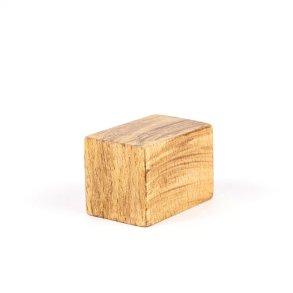
A hay bale (or straw bale) is indispensable on any farm. This simple, square wooden block invites the child to build and expand their play. Should the hay bales be stacked into a cozy hideout, or should they be loaded onto the tractor's trailer? That is entirely up to the child's imagination in the moment.

The conscious choice of a simple expression leans on the aesthetics known from the Waldorf tradition, where accessories support open-ended play without dictating it. The golden, yellow colour resembles real hay and brings the play to life.

Handmade and completely unique
The figure is carved in solid beech wood in a small family-owned workshop in Poland. The wood's natural grain clearly stands out through the colour, giving each individual hay bale its very own unique character.

Since everything is made by hand, there will always be small differences from bale to bale. The robust design and straight surfaces ensure that they can easily be stacked and stand stably on the play mat, in the barn, or on a nature table.


2.80 €

Show product

Handmade wooden farm - incl. ladder and fences

Wood & Care

WAC-11600


The heart of farm play
With this large, spacious, and handmade wooden farm, imaginative play truly takes flight. The ground floor features fine little stalls for the farm's wooden animals and a beautiful barn door, while the included ladder provides access to the large hayloft.

The four fences can be moved around and used to build an enclosure outside. It is the ideal starting point for learning about farm life through play.

The open design and the conscious choice to avoid excessive colours make this a true Waldorf-inspired toy. Here, the simple aesthetics support the child's imagination rather than dictating it. Are the horses in the stable for the night, or are the hens going up to the loft to build a nest? Only the child's imagination sets the limits.

Handcrafted quality for generations
The farm is made in a small Polish family-owned workshop, and is solidly handcrafted in solid beech wood and carefully sanded. This means that all surfaces and edges are completely smooth, and as a CE-approved wooden toy, it is safe and comfortable for small hands to play with.

The light wood contrasts beautifully with the dark brown roof, and the natural grain of the wood stands out clearly, making every single farm completely unique.

This wooden farm is the perfect base for our large selection of wooden farm animals from Wood & Care. Please note that the animals and figures are sold separately, allowing you to curate exactly the family and flock of animals you would like to live on the farm.


180.30 €
Show product
News
Puzzle Advent Calendar - Sweet Christmas

Puzzle Advent Calendar - Sweet Christmas

ViSSEVASSE

VIV-02194


Four Sundays, four boxes
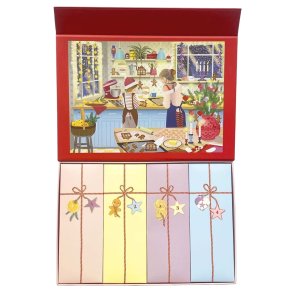
Rather than 24 small doors, this calendar follows the Sundays of Advent. On the first Sunday you open box one with 250 pieces, and so on through to Christmas.

That gives you four longer puzzle sessions instead of twenty-four short ones - a rhythm that suits the Sundays when there's time to stay at the table a while.

Four recipes and activities behind the QR codes

On the back of each box is a QR code leading to a Christmas recipe or a creative activity:
 

  • 🎄 1st Advent: how to make dried orange slices
  • 🍪 2nd Advent: how to bake gingerbread cookies
  • ✨ 3rd Advent: how to bake Danish vanilla butter cookies
  • ❤️ 4th Advent: how to weave traditional Danish Christmas hearts


Bring it back next December

Boxes and pieces are all numbered, so everything sorts back into place once Christmas is over. The calendar can be packed away and used again next year, or passed on to someone starting their own tradition.

Size and details


  • 1,000 pieces in 4 numbered boxes, 250 pieces each
  • Finished puzzle: 63 x 45 cm
  • Box: 31.5 x 22 x 5 cm
  • 4 QR codes with recipes and activities
  • Illustration: Sweet Christmas, designed by ViSSEVASSE
  • Warning: contains small parts. Not suitable for children under 3 years.


About ViSSEVASSE

ViSSEVASSE is a Danish design brand making graphic posters, cards and puzzles with simple, storytelling illustrations. The puzzles are FSC® certified, licence code SCS-COC-005763-BS.


51.40 €

Show product
News
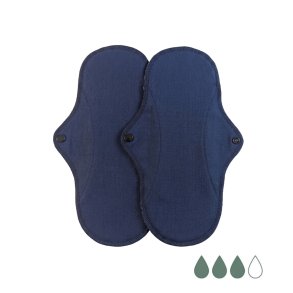
Reusable sanitary pads - Active with wings - TorTex 37.5® - Blue

Reusable sanitary pads - Active with wings - TorTex 37.5® - Blue

Imse Vimse

IMV-02593


How much is 15 ml?
Active Regular holds approximately 15 ml. For comparison, a normal period is 30-40 ml in total over the entire cycle, with the most on days two and three.

In practice, this means that Regular is suitable for a moderate flow. In Imse Vimse's range, it sits between the panty liner and the night pads, making it the model most people use the most of. On the first, heavy days, you will likely need to change more often or choose a larger model, and for the night, there is a longer night pad.

The wings and the popper

The pad has wings that fold around the gusset of the underwear and close with a popper underneath. This is a different logic to a disposable pad that sticks to the bottom of the underwear: here, the popper holds the pad in place, and the underwear holds it against the body. Therefore, fairly close-fitting underwear works better than loose ones.

The side with the visible stitching should face the skin.

What TorTex 37.5® is

The three absorbent layers are TorTex - a blend of hemp fibre, cotton fibre, and 37.5® polyester - plus a little elastane so the pad follows the body. The back is a waterproof PUL layer, meaning polyester laminated with polyurethane, the same material used in cloth nappies.

37.5® is a moisture management technology: particles in the fibre move moisture vapour away from the skin, so the surface feels drier. This is about comfort, not absorbency - that comes from the hemp and the cotton.

What has been tested
The fabric is cytotoxicity tested at Hohenstein, an accredited German textile institute, and the fabric suppliers are OEKO-TEX Standard 100 certified. The cytotoxicity test evaluates whether the material is compatible with living cells — relevant for a product that sits against mucous membranes for several days.

Washing

The manufacturer's instructions state: rinse in cold water after use, then wash at 60 degrees with similar colours.

The cold rinse is not a politeness tip. Hot water causes blood to coagulate and set in the fibres; cold water removes most of it before the pad even reaches the laundry basket.
 

  • No fabric softener. Fabric softener leaves a film on the fibres, causing the pad to repel liquid instead of absorbing it. This is the fastest way to ruin a cloth pad.
  • Do not tumble dry. Heat breaks down the PUL laminate, and then the pad will start to leak. Hang to dry.
  • No bleach, no ironing, no dry cleaning.


How many do you need?
With two in the pack, you can use one while the other is being washed. If cloth pads are to cover an entire period without washing in between, most people need five to seven in mixed sizes. This is worth knowing before buying one pack and being disappointed.

On the go

Used pads are folded with the wet side facing inwards and placed in a waterproof bag until you get home. Imse Vimse makes bags for this purpose.

The packaging

The box is FSC® MIX certified, licence code C155860, and should be sorted as paper.

Specifications

  • Model: Active Regular with wings
  • Capacity: approx. 15 ml
  • 3 absorbent layers in TorTex 37.5® (97 % TorTex, 3 % elastane) - hemp, cotton, 37.5® polyester
  • Waterproof backing: PUL, 100 % polyester laminated with polyurethane
  • Fastens with a popper under the underwear
  • Quantity: 2 pcs · Colour: blue
  • Washing: rinse cold, wash at 60 °C. No fabric softener, do not tumble dry
  • Design and distribution: Monthly of Sweden AB, Halmstad.
  • Made in Latvia

33.50 €

Show product
News
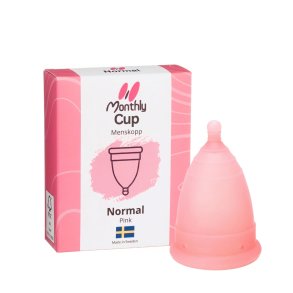
Menstrual cup Normal - MonthlyCup - 22 ml - Pink

Menstrual cup Normal - MonthlyCup - 22 ml - Pink

MonthlyCup

IMV-61960


How a menstrual cup works
A menstrual cup collects the blood instead of absorbing it, the way a tampon or a pad does. The same cup can be emptied, rinsed and used again - cycle after cycle for up to five years. If the cup sits correctly, it is leak-proof, and you can sleep, train and swim as normal.

The material

The cup is made of medical grade silicone. Silicone is produced from silicon, which is extracted from sand. These cups are pink and therefore contain up to 1% vegan pigment paste; the rest is medical grade silicone.

The routine: fold, insert, empty, repeat


  1. Wash hands and fold the cup. Press it together into a C. The C-fold is the most common to start with, but there are others, and most eventually find one that works best.
  2. Insert it, and let it unfold. The cup must sit completely inside the vagina, below the cervix. Feel around the base and check that it has unfolded.
  3. Empty according to your flow. Most people only need to empty it twice a day. If you have a heavy period, it must be done more often. Check more frequently in the beginning until you know your flow.
  4. Break the vacuum before you take it out. Gently pinch the base so the suction releases, and then take it out slowly. Do not pull on the stem alone.


Never leave the cup in for more than 12 hours
12 hours is the absolute limit, regardless of how little you bleed. Take the cup out, clean it, and put it back in. This is the single most important rule when using a menstrual cup, and it relates to the section below.

Good to know about TSS

Toxic shock syndrome is a very rare but serious condition that can occur in connection with menstruation. It is linked to bacteria that can multiply when menstrual blood sits stagnant in the body for a long time - and this is why the 12-hour limit exists.

If you suddenly get a high fever and feel very unwell while using the cup, take it out and seek medical advice.

The risk is small, and it becomes smaller when you wash your hands before every handling, stick to the 12-hour limit and clean the cup as described. But it is worth knowing before you start - not afterwards.

Cleaning


  • Before first use: boil the cup.
  • At each emptying: wash hands, empty the cup, and rinse it with mild soap and water before putting it back in.
  • Before or after each period: boil the cup again. If you cannot boil it in a pot, there are microwave bags for this purpose.
  • Twice a year: cleaning tablets remove discolouration. MonthlyCup's own tablets are based on sodium percarbonate and vegetable binders.


Let the cup dry completely, and store it in a breathable place. Replace the cup if the silicone becomes damaged, sticky or noticeably changes.


25.60 €

Show product
News
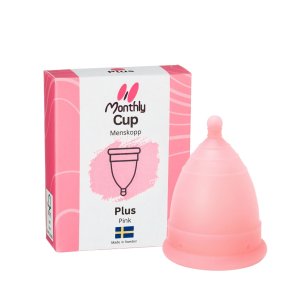
Menstrual cup Plus - MonthlyCup - 43 ml - Pink

Menstrual cup Plus - MonthlyCup - 43 ml - Pink

MonthlyCup

IMV-62080


How a menstrual cup works
A menstrual cup collects the blood instead of absorbing it, the way a tampon or a pad does. The same cup can be emptied, rinsed and used again - cycle after cycle for up to five years. If the cup sits correctly, it is leak-proof, and you can sleep, train and swim as normal.

The material

The cup is made of medical grade silicone. Silicone is produced from silicon, which is extracted from sand. These cups are pink and therefore contain up to 1% vegan pigment paste; the rest is medical grade silicone.

The routine: fold, insert, empty, repeat


  1. Wash hands and fold the cup. Press it together into a C. The C-fold is the most common to start with, but there are others, and most eventually find one that works best.
  2. Insert it, and let it unfold. The cup must sit completely inside the vagina, below the cervix. Feel around the base and check that it has unfolded.
  3. Empty according to your flow. Most people only need to empty it twice a day. If you have a heavy period, it must be done more often. Check more frequently in the beginning until you know your flow.
  4. Break the vacuum before you take it out. Gently pinch the base so the suction releases, and then take it out slowly. Do not pull on the stem alone.


Never leave the cup in for more than 12 hours
12 hours is the absolute limit, regardless of how little you bleed. Take the cup out, clean it, and put it back in. This is the single most important rule when using a menstrual cup, and it relates to the section below.

Good to know about TSS

Toxic shock syndrome is a very rare but serious condition that can occur in connection with menstruation. It is linked to bacteria that can multiply when menstrual blood sits stagnant in the body for a long time - and this is why the 12-hour limit exists.

If you suddenly get a high fever and feel very unwell while using the cup, take it out and seek medical advice.

The risk is small, and it becomes smaller when you wash your hands before every handling, stick to the 12-hour limit and clean the cup as described. But it is worth knowing before you start - not afterwards.

Cleaning


  • Before first use: boil the cup.
  • At each emptying: wash hands, empty the cup, and rinse it with mild soap and water before putting it back in.
  • Before or after each period: boil the cup again. If you cannot boil it in a pot, there are microwave bags for this purpose.
  • Twice a year: cleaning tablets remove discolouration. MonthlyCup's own tablets are based on sodium percarbonate and vegetable binders.


Let the cup dry completely, and store it in a breathable place. Replace the cup if the silicone becomes damaged, sticky or noticeably changes.


25.60 €

Show product
News
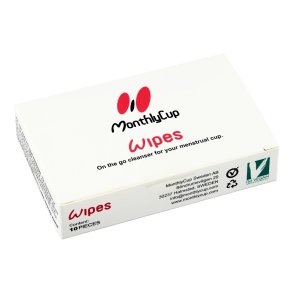
Disinfectant wipes for menstrual cups - 10 pack

Disinfectant wipes for menstrual cups - 10 pack

MonthlyCup

IMV-61380


What they solve
The most frequently asked question about menstrual cups is what to do in a public toilet. The answer is usually that you wipe the cup with toilet paper and rinse it the next time there is a sink - and for most, that is enough because the cup can stay in for many hours at a time.

But there are situations where there is no water at all: a campsite, a train toilet, a flight, a festival. That is what the wipes are for.

How to use them


  1. Wash your hands if you have the opportunity.
  2. Take the cup out and empty it.
  3. Wipe the cup with a wipe - both inside and outside, and remember the holes under the rim.
  4. Let the cup air dry completely before inserting it again. This step should not be skipped.
  5. Discard the wipe in the bin.


Why air drying is important
Alcohol evaporates quickly, but it must be allowed to do so. Mucous membranes tolerate alcohol less well than skin, and the cup must be dry when it goes back in. If you give it half a minute while you wash your hands or pack up, it is ready.

If you feel a stinging sensation when the cup is put back in, it was not dry enough. Take it out, let it finish drying, and try again.

They do not replace boiling or soap and water

This is a travel solution, not a routine. MonthlyCup's own recommendation is still:
 

  • Rinse the cup with mild soap and water at each emptying
  • Boil it before first use and again before or after each period


The wipes cover the gaps - not the basic cleaning.

Contents and safety

The wipes contain 77% isopropyl alcohol and 23% water. This makes them highly flammable, and they must be treated accordingly:
 

  • Keep out of reach of children
  • Do not expose to heat, hot surfaces, sparks, open flames or other ignition sources
  • No smoking during use
  • Keep the container tightly closed
  • Store in a cool, well-ventilated place


Disposal
Used wipes and packaging belong in residual waste - not in food waste or paper. The product is labelled with instructions for drop-off at the municipality's hazardous waste reception centre; this applies to remnants of the product itself, not the individual used wipe.


4.60 €

Show product
News
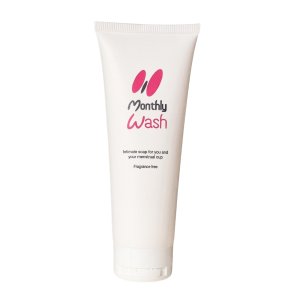
Feminine wash & menstrual cup cleanser

Feminine wash & menstrual cup cleanser

MonthlyCup

IMV-61502


One wash for two things
Most people who use a menstrual cup end up with two products on the bathroom shelf: something for the cup and something for themselves. Monthly Wash is intended as both, which in practice means one less thing to pack when traveling.

For the cup: use it with water at every emptying. For the intimate area: use it as a regular wash in the shower.

Externally - and only externally

Intimate wash is used on the vulva, meaning externally. The vagina cleanses itself, and internal rinsing is advised against by health authorities because it disrupts the natural flora. This applies to Monthly Wash as to any other intimate wash.

What is in it

The formulation is built on mild surfactants - cocamidopropyl betaine, sodium lauroyl sarcosinate, and sodium lauryl sulfoacetate - along with glycerin, which is moisture-retaining. Lactic acid and citric acid adjust the acidity, and phenoxyethanol acts as a preservative. It contains neither perfume nor colorants.

The packaging
The tube is made of bio-based polyethylene, where the raw material is sugarcane instead of crude oil. It is worth being precise about: the material is still plastic and does not break down in nature. The difference lies in what the plastic is made of, not how it is disposed of. The tube is sorted as plastic.

Soap does not replace boiling

Monthly Wash is for daily cleaning. The cup must still be boiled before the first use and before or after each menstruation. The order is:
 

  • At each emptying: rinse the cup with Monthly Wash and water
  • Before and after each menstruation: boil the cup
  • When there is no water: use disinfecting wipes


INCI
Aqua, Cocamidopropyl Betaine, Glycerin, Sodium Lauroyl Sarcosinate, Sodium Chloride, PEG-120 Methyl Glucose Trioleate, Propanediol, Caprylyl Glycol, Sodium Lauryl Sulfoacetate, Sodium PCA, Lactic Acid, Citric Acid, Phenoxyethanol.


8.40 €

Show product
News
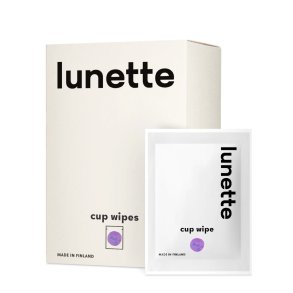
Menstrual cup wipes - 20 individually wrapped

Menstrual cup wipes - 20 individually wrapped

Lunette

LUN-60032


One sachet at a time
Most wet wipes come in a tub or pouch that must be closed after each use - and which dries out if you forget. Here, each wipe is in its own sealed sachet.

In practice, this means you can put two or three sachets in your sports bag, in the pocket of your running jacket, or in the small compartment of your backpack and forget about them. They are wet when you need them, even six months later. This is also why they work for traveling and outdoor activities, where an opened package would otherwise be used up or dried out.

How to use them
 

  1. Wash your hands if you have the opportunity.
  2. Take the cup out and empty it.
  3. Wipe the cup with toilet paper first.
  4. Then wipe it with the wipe - both inside and out, and remember the holes under the rim.
  5. Let the cup dry completely before inserting it again.
  6. Discard the wipe and sachet in the trash bin. They must not be flushed down the toilet.


Why drying must not be skipped
The alcohol must evaporate before the cup comes into contact with the mucous membrane. It typically takes less than a minute, and you can use the time to pack up or wash your hands. If you feel a stinging sensation when the cup is inserted, it was not dry. Take it out, let it finish drying, and try again.

They do not replace boiling
The wipes are a solution for on the go. The cup must still be boiled before the first use and before or after each menstruation, and rinsed with water and a mild wash at each emptying at home.

What they consist of

The wipe is viscose made from plant fibers. The liquid is 82% denatured alcohol and 18% water - no perfume, no added care ingredients. The high alcohol content makes the wipes highly flammable. They must be kept away from heat, sparks, and open flames, and stored out of reach of children.

Disposal
Used wipes and sachets belong in the residual waste. They must not be flushed down the toilet - viscose does not dissolve in the sewer and contributes to blockages.


12.20 €

Show product
News
Mini Repair Kit - face serum and face gel skincare gift set

Mini Repair Kit - face serum and face gel skincare gift set

The Organic Pharmacy

TOP-25666


Why the two go well together
The gel and the serum each solve their own task, and they do so in different phases.
 

  • The gel is water-based. It absorbs quickly and adds moisture along with Cica and ginseng. However, water-based products evaporate if they are not kept in place.
  • The serum is oil-based, with rosehip seed oil. Oil absorbs more slowly and forms a layer on the surface. Applied on top of the gel, it slows evaporation, keeping the moisture in the skin for longer.


If you only use the gel, the moisture disappears faster. If you only use the serum, there is less moisture to retain. That is the whole logic behind using them together.

How to use them
 

  1. Cleanse your face and leave the skin slightly damp.
  2. Apply the gel. Wait a moment for it to absorb.
  3. Apply the serum on top - a few drops are enough.


Morning and evening, or only in the evening if the skin is oily.

The antioxidants

Both products contain The Organic Pharmacy's antioxidant blend, including alpha lipoic acid, DMAE, and MSM. The difference lies in the base: the gel delivers them in water, the serum in oil. Some antioxidants are water-soluble, others fat-soluble, and the two formulations therefore cover each part.

About moisture retention

The Organic Pharmacy states that both products have been tested for transepidermal water loss - i.e., how much moisture the skin releases. The gel measured a reduction of 15.6% after 28 days, the serum 5.8%.

How far does 15 ml go
A 15 ml bottle typically equals four to six weeks of use with daily application of both products. This is enough to feel whether the routine suits your skin before investing in the full size.


55.30 €
Show product
News
Petal Soft Skin Kit - skincare gift set with retinol and rosehip

Petal Soft Skin Kit - skincare gift set with retinol and rosehip

The Organic Pharmacy

TOP-25673


Three products, two times of day
This is not three isolated products in a box. It is a routine divided across the day:
 

  • Evening: Cleanse - Night Essence - Lifting Eye Gel
  • Morning: Lifting Eye Gel - Rose Rejuvenating Face Cream - sunscreen


The reason for the division is the essence. It contains retinol and fruit acids, which make the skin more sensitive to light, and therefore it belongs in the evening.

The evening: the essence

Rose Exfoliating Night Essence is a liquid leave-on essence, meaning a step between cleansing and cream. It contains AHA fruit acids, the milder PHA gluconolactone and retinol, together with sodium hyaluronate, rose water and witch hazel.

AHA loosens dead skin cells on the surface. PHA has larger molecules and therefore penetrates more slowly and more gently. Retinol works over time on skin renewal. The combination is the reason the skin feels smoother in the morning - and the reason you have to take it easy in the beginning.

The morning: the cream
Rose Rejuvenating Face Cream is a nourishing day cream for normal and dry skin, with Centella Asiatica, calendula and blueberry extract. 77% of the ingredients are organic calculated according to ISO 16128.

The eye gel - both times
Lifting Eye Gel is the actual reason the set exists: we do not sell it separately.

It is an ultra-light, non-oily gel in a roll-on, which is applied from the inner to the outer corner of the eye. The rollerball is cool, which most people notice immediately in the morning. The key ingredients are eyebright (Euphrasia officinalis) and Kigelia africana, in a base of aloe vera and glycerine.

It is both dermatologically and ophthalmologically tested - meaning evaluated for use around the eyes, not just on the skin in general.

Start slowly

If you are new to retinol and acids, use the essence every second or third evening for the first week or two, and then increase the frequency. Stinging, slight redness or minor flaking at the beginning is common, but it should subside.

Sunscreen the day after is not optional. Retinol and fruit acids make the skin more sensitive to the sun, and without sun protection, you are working against yourself. If the set is a gift, it is worth passing this on - the recipient does not necessarily know the products.


70.70 €
Show product
News
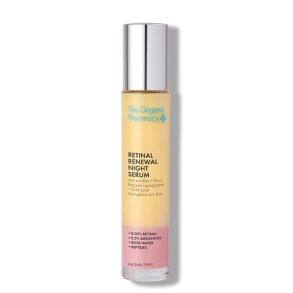
Retinal Renewal Night Serum - gentle vitamin A with bakuchiol

Retinal Renewal Night Serum - gentle vitamin A with bakuchiol

The Organic Pharmacy

TOP-26137


Why retinal and not retinol
The skin cannot use Vitamin A in the form it is in the bottle. It must first be converted into retinoic acid, and this conversion happens in steps: retinol becomes retinal, and retinal becomes retinoic acid. A product with retinol must therefore go through both steps. A product with retinal starts halfway down the chain.

This is the reason why retinal products are usually formulated in significantly lower concentrations than retinol products. Here it is 0.03%. That number might look small next to the 0.3 or 0.5% you encounter on a retinol bottle - but the two numbers cannot be directly compared, precisely because the molecule is not at the same place in the chain.

The encapsulation is the second approach. Retinal is sensitive to light and oxygen, and it is also the type of molecule that causes the most disturbance in the skin if it gets it all at once. By encapsulating it, two things are achieved: it keeps better in the bottle, and it is gradually released into the skin instead of in one hit.

What else is in the bottle:
 

  • Bakuchiol, 0.5%. A plant extract from Psoralea corylifolia, which in recent years has become a regular companion to Vitamin A in skincare. Here it is included as a complement to the retinal, not as a replacement for it.
  • Peptides. Short chains of amino acids used in skincare products focusing on the firmness and elasticity of the skin's appearance.
  • Rose water. The serum's water phase is built on rose water rather than regular water. This is also what you can smell when you open the bottle.


How to use it

  1. Cleanse your face and pat it dry.
  2. Take 2-3 drops in the palm of your hand and distribute them over your face and neck. Avoid the area right next to the eyes.
  3. Let it absorb for a minute, and apply your night cream on top.
  4. Use sunscreen in the morning. Vitamin A makes the skin more sensitive to the sun, and this also applies the day after.


Start slowly
If you are new to Vitamin A, start with two to three evenings a week for the first couple of weeks, and then increase if the skin responds well. Many experience a little dryness or flaking in the beginning - this is common and usually settles down. If the skin remains irritated, take a break for a few days and resume with longer intervals.

Do not use it on the same evening as acids (AHA/BHA) or other Vitamin A products, unless your skin therapist has advised otherwise.

What to expect along the way
For the first two weeks, you should probably not expect to see changes - you might even see a bit of the opposite of what you hoped for. A little dryness, maybe a bit of flaking around the nose and mouth. This is the skin getting used to the Vitamin A - and don't worry, it settles down on its own. At four to six weeks of use, visible things typically begin to happen. The surface becomes more even to look at, and makeup sits nicer because there are fewer uneven areas to put it on top of. After two to three months, the results will begin to be more prominent, and fine lines will appear less distinct. Unfortunately, skincare products with Vitamin A are not products you can evaluate after just one month.

Good to know

  • The serum is not recommended during pregnancy and breastfeeding. This is the manufacturer's own recommendation, and it is worth following.
  • The product contains perfume, including the declarable fragrance allergens citral, citronellol, cinnamal, eugenol, geraniol, limonene and linalool. If you are known to be sensitive to fragrances, try the product on a small area first.
  • Store the bottle in a dry place and out of direct sunlight. Vitamin A is best kept in the dark.

61.70 €
Show product
News
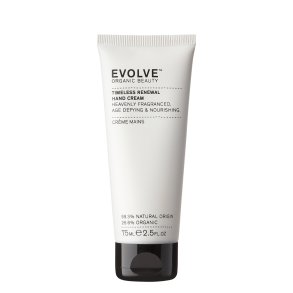
Timeless Renewal Hand Cream - hand cream for dry hands

Timeless Renewal Hand Cream - hand cream for dry hands

Evolve Organic Beauty

EVO-42885


Why hands are harder than the face
The back of the hand has far fewer sebaceous glands than the face, and it is the sebum that forms the film that retains moisture. At the same time, the hands are the skin that most often encounters water, soap, and sanitizer. Every wash removes a bit of the film, and if it is not rebuilt, the skin becomes tight, rough, and eventually cracked. This is why hands can be in bad shape during a period when the rest of the skin is fine - and why a hand cream needs to do something different than a face cream.

What is in the cream
 

  • Ceramides. Ceramide NP is one of the lipids the skin barrier itself is made of. Added from the outside, they support the barrier's ability to retain moisture.
  • Shea butter and murumuru butter. Two rich plant butters that form a layer on the surface. Murumuru comes from an Amazonian palm and is among the most saturated plant fats available.
  • Bio-retinol from Bidens Pilosa. Evolve's own name for a plant extract used instead of retinol. It is not vitamin A - see the questions below.
  • Sunflower oil, cottonseed oil, and linseed oil. Light oils that make the cream smooth to distribute without leaving the hands greasy.


How to use it

Massage it into the hands, and use a little extra in the areas that get the driest - typically the knuckles and around the cuticles. The best time is right after washing your hands, while the skin is still slightly damp, because then the cream settles on top of the water instead of having to replace it. Use daily.

The scent
Mandarin, rose geranium, ylang ylang, and vanilla. It comes from the essential oils in the formulation, and no perfume is added on top - something you can see on the ingredient list, where there is no Parfum listed. The fragrances declared at the bottom of the list are the substances the oils themselves naturally contain.

Good to know
 

  • The cream contains eight declarable fragrances from the essential oils: limonene, linalool, citral, citronellol, geraniol, benzyl salicylate, farnesol, and benzyl benzoate. If you are known to be sensitive to fragrances, try it on a small area first.
  • The bio-retinol is not vitamin A, so the cream requires neither sun protection nor a build-up phase, and it can be used all year round.
  • Since the product does not contain vitamin A, it can be safely used by pregnant and breastfeeding women.

23.10 €
Show product
News
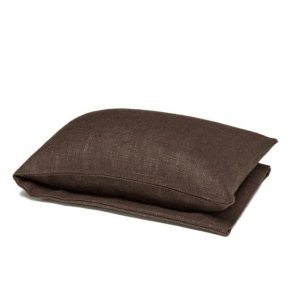
Linen wheat bag - microwave heat pack - Brown

Linen wheat bag - microwave heat pack - Brown

Terrible Twins

TTW-21214


Wheat, not watts
A wheat bag behaves differently from an electric heat pad. The electric one holds a fixed temperature for as long as it is plugged in, and it cannot go further than the cord reaches. A wheat bag does the opposite: it is warmed once, it is at its warmest to begin with and cools gradually over half an hour or so - and it can be taken along to wherever you happen to be sitting.

The warmth is a different kind, too. Wheat grains take up moisture from the air and release it again when heated, so the warmth feels soft and slightly damp rather than dry. And because the grains are loose, the bag settles right against a shoulder or the small of the back, where a firm pad would sit proud and bulge.

It works the other way round as well
Put the bag in a bag and leave it in the freezer for an hour, and you have the opposite: a cool, mouldable pad for warm summer nights or a stiff neck. It is the same bag - it just gets treated in reverse.

Linen and wheat
The cover is sewn in linen, one of the few materials that grows softer the more it is used and washed, and that is at the same time strong enough to go into the oven again and again. Inside lies KRAV-certified organic wheat, grown in Sweden. The bag is sewn in Sweden too.

How to warm it
In the microwave: 2-3 minutes at 750 watts.
In a conventional oven: 10-15 minutes at 125 degrees. The fabric must not touch the sides or the heating elements of the oven.

Important safety information
A wheat bag must not be overheated. The material is not flame resistant, and heating it for too long - or heating it again while it is still warm - can make the grains begin to smoulder from the inside. Always let the bag cool down completely before warming it again, and keep to the times above. Do not leave the oven or the microwave while the bag is heating, and do not leave it in a bed you are sleeping in.

Washing
The cover comes off and is washed at 60 degrees. The wheat bag itself must not go in water - wet grains go mouldy and cannot be dried out properly again.


33.40 €

Show product
News
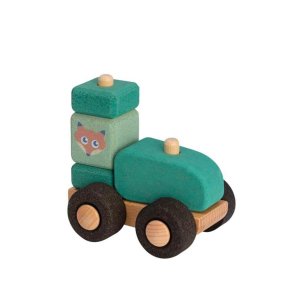
Frieda's tractor - wooden toy with cork stacking blocks

Frieda's tractor - wooden toy with cork stacking blocks

Korko

KOR-85149


First a tractor, then a tower
The blocks sit loosely on two pegs on the base, and that is where the play is. They can be stacked in the order they came in or in a completely different one, and shared between the two pegs however the child likes - and for a child of eighteen months, getting the block onto the peg is a task in itself. Once the tower is up, the tractor can be pushed along, and then the whole thing falls over and you start again.

Frieda the fox is printed on one of the blocks, and she is there for a reason: once there is a character in a toy, the tractor is no longer just a tractor but a tractor with a driver who is going somewhere. That is what gets a two-year-old talking while she plays.

The cork tyres are what you notice
Cork is light, soft and sound-absorbing, and that is why the tractor does not clatter across a wooden floor the way plastic wheels do. It is also a material children respond to with their fingers - the surface is textured without being rough, and it feels warmer to the touch than wood.

Where the cork comes from
Cork is the bark of the cork oak. It is stripped from the trunk every few years, and the bark grows back - the tree is not felled. It is one of the few raw materials harvested from a living tree without the tree being lost.

From 18 months
The manufacturer states the tractor from 18 months. It is worth following: the age relates to the size of the blocks and to what a child at that stage can manage with their hands.

Looking after it
Cork does not take being left in water. Wipe dirt off with a damp cloth rather than rinsing the tractor, and let it dry before putting it away. Store it indoors and out of direct sunlight - over time, sunlight makes cork fade and turn brittle. Avoid cleaning products containing abrasives.


15.30 €

Show product
News
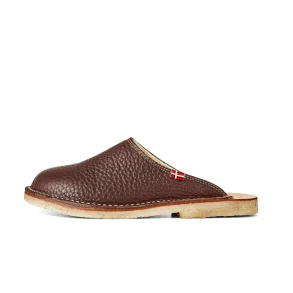
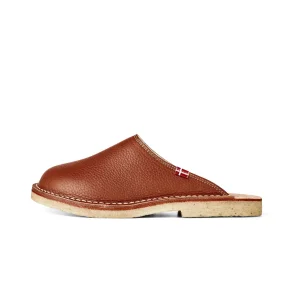
Duckfeet Klitmøller - wool-lined leather mule slippers - Choco

Duckfeet Klitmøller - wool-lined leather mule slippers - Choco

Duckfeet


A shoe that can be resoled
It is rare in a slipper, but Klitmøller is built so that the outsole can easily be replaced. The crepe rubber sole is the part that wears first, and when it has gone, a cobbler can put a new one on rather than the shoe becoming waste. That places demands on the rest of the construction - there has to be something to build on - and it is one of the reasons the midsole and insole are vegetable-tanned leather rather than foam or board.

The layers in the sole
At the very bottom of the slipper's sole is the crepe rubber, soft and shock-absorbing, giving a different footfall from a hard rubber sole. Next comes a midsole in vegetable-tanned leather, which is what gives the shoe its shape and holds it. The top layer of the sole is an insole in the same vegetable-tanned leather, which takes up moisture from the foot during the day and releases it again when you are not wearing the shoe.

Wide toe box and flat footbed
The insole is flat, with no built-in arch support. That is a deliberate choice at Duckfeet: the toes are allowed to spread, and the foot moves as it wants to. The fit is medium to wide.

If you need arch support, you can put your own insoles in - the flat footbed means most insoles and orthotic footbeds will fit.

The wool lining
The lining is European sheep's wool. Wool holds the warmth without turning clammy, because the fibres can take up moisture without feeling wet - which is why a wool-lined shoe rarely becomes as heavy and damp as a synthetically lined one.

The leather itself
The Choco colour is a deep, saturated brown with a soft, grainy surface that catches the light unevenly and therefore looks alive rather than flat. It is Terracare leather made in Germany, 2.5 mm thick and full-grain, meaning the grain surface is kept as it is rather than being sanded down.

It is the kind of leather that takes on a patina - the tone deepens and grows more uneven where the shoe bends, and that is meant as a quality and not as wear.

Looking after them
Leather needs feeding at regular intervals. A thin layer of leather cream or shoe cream a couple of times a season is enough - little and often rather than a lot and rarely. Let the cream sit for a few minutes and buff with a soft cloth afterwards. Remember the edges and the seams.

If the shoes get dirty, wipe them with a damp cloth, let them dry completely, and treat the leather afterwards. Never on the radiator - that heat dries the leather out and makes it porous.

One quirk of crepe rubber: it stiffens in the cold. Used indoors you will not notice it, and if the shoes have been standing somewhere cold, they soften again with wear. Avoid contact with solvents, which break the rubber down.


122.30 €

Show product
News
Duckfeet Klitmøller - wool-lined leather mule slippers - Nut

Duckfeet Klitmøller - wool-lined leather mule slippers - Nut

Duckfeet


A shoe that can be resoled
It is rare in a slipper, but Klitmøller is built so that the outsole can easily be replaced. The crepe rubber sole is the part that wears first, and when it has gone, a cobbler can put a new one on rather than the shoe becoming waste. That places demands on the rest of the construction - there has to be something to build on - and it is one of the reasons the midsole and insole are vegetable-tanned leather rather than foam or board.

The layers in the sole
At the very bottom of the slipper's sole is the crepe rubber, soft and shock-absorbing, giving a different footfall from a hard rubber sole. Next comes a midsole in vegetable-tanned leather, which is what gives the shoe its shape and holds it. The top layer of the sole is an insole in the same vegetable-tanned leather, which takes up moisture from the foot during the day and releases it again when you are not wearing the shoe.

Wide toe box and flat footbed
The insole is flat, with no built-in arch support. That is a deliberate choice at Duckfeet: the toes are allowed to spread, and the foot moves as it wants to. The fit is medium to wide.

If you need arch support, you can put your own insoles in - the flat footbed means most insoles and orthotic footbeds will fit.

The wool lining
The lining is European sheep's wool. Wool holds the warmth without turning clammy, because the fibres can take up moisture without feeling wet - which is why a wool-lined shoe rarely becomes as heavy and damp as a synthetically lined one.

The leather itself
The Nut colour is a refined, saturated brown with a soft, grainy surface that catches the light unevenly and therefore looks alive rather than flat. It is Terracare leather made in Germany, 2.5 mm thick and full-grain, meaning the grain surface is kept as it is rather than being sanded down.

It is the kind of leather that takes on a patina - the tone deepens and grows more uneven where the shoe bends, and that is meant as a quality and not as wear.

Looking after them
Leather needs feeding at regular intervals. A thin layer of leather cream or shoe cream a couple of times a season is enough - little and often rather than a lot and rarely. Let the cream sit for a few minutes and buff with a soft cloth afterwards. Remember the edges and the seams.

If the shoes get dirty, wipe them with a damp cloth, let them dry completely, and treat the leather afterwards. Never on the radiator - that heat dries the leather out and makes it porous.

One quirk of crepe rubber: it stiffens in the cold. Used indoors you will not notice it, and if the shoes have been standing somewhere cold, they soften again with wear. Avoid contact with solvents, which break the rubber down.


122.30 €

Show product

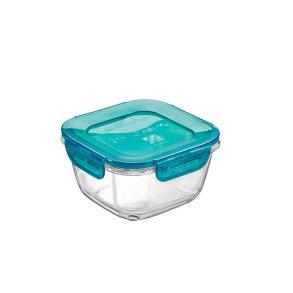
Glass storage box - ovenproof & airtight - 14x14 cm - Blue

Frigoverre

FRI-92912


Glass dish with lid from Frigoverre

Glass takes on neither taste, smell nor colour from the food, and the dish can be used again and again without the surface changing.

This glass dish goes in both the oven and the microwave, and it is excellent for freezing leftovers.

This dish measures 14x14 cm and has a lid in azure blue plastic with a silicone seal.

The dish holds 0.773 litres


Height: 8 cm

Length: 14 cm

Width: 14 cm


The lid closes completely, so you can put the dish in your bag without worrying about leaks.

And it is enormously practical that you can see through it, giving you a quick overview of your fridge or freezer and helping you avoid food waste.

It is also rather practical that the food can be frozen in the dish - and reheated in it when you are ready.


The plastic lids are food-safe, but if you use the dishes as intended, the lids do not come into contact with your food at all. They are, however, important for keeping the glass containers sealed.

Do not put the lids in the oven if you are using the dish for heating there.

Glass dishes and lids are dishwasher-safe.

The glass dish withstands heating in the oven (without the lid) at a maximum of 220 degrees

It withstands freezing down to minus 20 degrees

And you can use it in the microwave with the lid open up to 70 degrees.

See the full range of glass dishes from Frigoverre


21.80 €

Show product
News
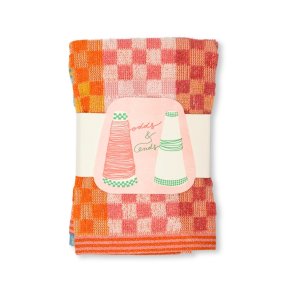
Wash cloth set #134 - Checkered Check - 2 pcs

Wash cloth set #134 - Checkered Check - 2 pcs

Foekje Fleur

FOF-27189


Odds & Ends

Colorful home textiles – made from surplus materials from industry

When factories dye yarn for textile production, an extra stock is often made just in case – but much of this yarn ends up unused. Odds & Ends textiles are designed to make full use of these scraps and create endless, unexpected color combinations.


Collections & Colors

Odds & Ends collections are produced in batches. The factory collects surplus materials and uses these colors to create a new design, which is then put into production. The precise design is just the starting point – during production, some of the residual materials are used up and replaced with similar colors.

Therefore, the images you see are an indicative representation of how the textiles look, but there will be slight variations within each batch.


Colours may vary

As these textiles are produced in small batches from surplus materials, colors may vary. However, the general color palette is always preserved, so that textiles within the same color scale can be easily combined. The product you receive may be identical to or have slight variations compared to the images on this page. The duo set consists of one textile in primarily cold tones and one in primarily warm tones.


Washing and care instructions

All Odds & Ends textiles can be washed at 30°C in the washing machine's cotton program together with similar colours. To preserve the intensity of the colors, an organic detergent is recommended for colored washing.

To extend the life of the textiles, air drying is recommended, but terrycloth products such as soft towels – especially those with a velor surface – may benefit from an occasional tumble dryer on medium heat to soften the fibers without the use of chemical fabric softeners.

If you live in an area with chalky water, you can soften both your textiles and washing machine by adding citric acid or vinegar to the rinse cycle from time to time.


Loose Threads

This product is woven with terry loops to ensure a soft and absorbent quality. Newly woven terry loops can be more prone to loose threads, so be careful with jewelry when first worn.

If a thread should come loose, never pull it! Carefully cut it off with sharp scissors – this will prevent further loose threads and will not affect the woven structure of the textiles. After the first few washes, the fibers will become more resistant to snags.


16.60 €

Show product
News
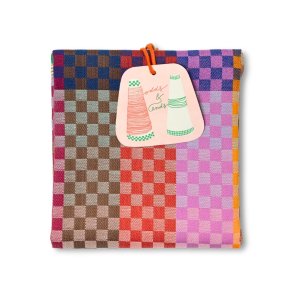
Tea Towel #136B - Checkered Check

Tea Towel #136B - Checkered Check

Foekje Fleur

FOF-46779


Odds & Ends
Colourful home textiles – made from surplus materials from industry

When factories dye yarn for textile production, they often make extra stock just to be safe – but a great deal of that yarn ends up unused. Odds & Ends textiles are designed to make full use of these leftovers, creating endless, unexpected colour combinations.

Collections & Colours
The Odds & Ends collections are produced in batches. The factory gathers surplus materials and uses those colours to create a new design, which is then put into production. The exact design is only the starting point – during production some of the leftover materials run out and are replaced with similar colours.

The images you see are therefore an indicative representation of how the textiles look, but there will be small variations within each batch.

Colours may vary
Because these textiles are produced in small batches from surplus materials, the colours may vary. The overall colour palette is always kept, however, so textiles within the same colour range combine easily. The product you receive may be identical to the images on this page, or show small variations from them. The duo set consists of one textile in mainly cool tones and one in mainly warm tones.

Washing and care
All Odds & Ends textiles can be washed at 30°C on the cotton programme together with similar colours. To keep the colours intense, we recommend an organic detergent for coloureds.

To extend the life of the textiles, air drying is recommended, but terry products such as soft towels – especially those with a velour surface – can benefit from the occasional tumble dry on medium heat, which softens the fibres without the need for fabric conditioner.

If you live in an area with hard water, you can soften both your textiles and your washing machine by adding citric acid or vinegar to the rinse cycle from time to time.

Loose threads
This product is woven with terry loops to give it a soft and absorbent quality. Newly woven terry loops can be more prone to loose threads, so take care with jewellery the first few times you use it.

If a thread does come loose, never pull it! Snip it off carefully with sharp scissors – this will prevent further loose threads and does not affect the woven structure of the textile. After the first couple of washes the fibres become more resistant to snagging.


14.00 €

Show product
News
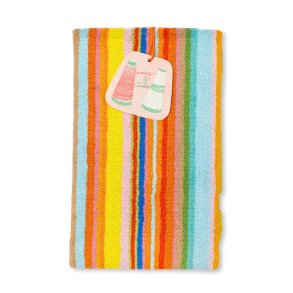
Foekje Fleur hand towel #114 Ribbons in striped terry with hanging loop, 50x90 cm

Hand Towel #114 - Ribbons

Foekje Fleur

FOF-43939


Odds & Ends
Colourful home textiles – made from surplus materials from industry

When factories dye yarn for textile production, they often make extra stock just to be safe – but a great deal of that yarn ends up unused. Odds & Ends textiles are designed to make full use of these leftovers, creating endless, unexpected colour combinations.

Collections & Colours
The Odds & Ends collections are produced in batches. The factory gathers surplus materials and uses those colours to create a new design, which is then put into production. The exact design is only the starting point – during production some of the leftover materials run out and are replaced with similar colours.

The images you see are therefore an indicative representation of how the textiles look, but there will be small variations within each batch.

Colours may vary
Because these textiles are produced in small batches from surplus materials, the colours may vary. The overall colour palette is always kept, however, so textiles within the same colour family combine easily. The product you receive may be identical to the images on this page, or show small variations from them.

Packaging
Each item comes with a cardboard hangtag or sleeve designed by Rachel Sender.

Washing and care
All Odds & Ends textiles can be washed at 60°C on the cotton programme together with similar colours. Washing at 30°C makes them last longer. To keep the colours intense, we recommend an organic detergent for coloureds.

To extend the life of the textiles, air drying is recommended, but terry products such as soft towels – especially those with a velour surface – can benefit from the occasional tumble dry on medium heat, which softens the fibres without the need for fabric conditioner.

If you live in an area with hard water, you can soften both your textiles and your washing machine by adding citric acid or vinegar to the rinse cycle from time to time.

Loose threads
This product is woven with terry loops to give it a soft and absorbent quality. Newly woven terry loops can be more prone to loose threads, so take care with jewellery the first few times you use it.

If a thread does come loose, never pull it! Snip it off carefully with sharp scissors – this will prevent further loose threads and does not affect the woven structure of the textile. After the first couple of washes the fibres become more resistant to snagging.


25.60 €

Show product
News
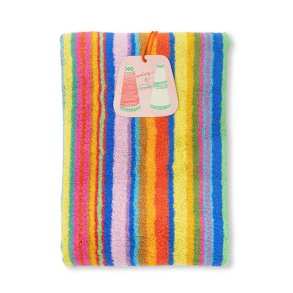
Foekje Fleur bath towel #111 Ribbons in striped terry with hanging loop, 60x120 cm

Bath Towel #111 - Ribbons

Foekje Fleur

FOF-46873


Odds & Ends
Colourful home textiles – made from surplus materials from industry

When factories dye yarn for textile production, they often make extra stock just to be safe – but a great deal of that yarn ends up unused. Odds & Ends textiles are designed to make full use of these leftovers, creating endless, unexpected colour combinations.

Collections & Colours
The Odds & Ends collections are produced in batches. The factory gathers surplus materials and uses those colours to create a new design, which is then put into production. The exact design is only the starting point – during production some of the leftover materials run out and are replaced with similar colours.

The images you see are therefore an indicative representation of how the textiles look, but there will be small variations within each batch.

Colours may vary
Because these textiles are produced in small batches from surplus materials, the colours may vary. The overall colour palette is always kept, however, so textiles within the same colour family combine easily. The product you receive may be identical to the images on this page, or show small variations from them.

Packaging
Each item comes with a cardboard hangtag or sleeve designed by Rachel Sender.

Washing and care
All Odds & Ends textiles can be washed at 60°C on the cotton programme together with similar colours. Washing at 30°C makes them last longer. To keep the colours intense, we recommend an organic detergent for coloureds.

To extend the life of the textiles, air drying is recommended, but terry products such as soft towels – especially those with a velour surface – can benefit from the occasional tumble dry on medium heat, which softens the fibres without the need for fabric conditioner.

If you live in an area with hard water, you can soften both your textiles and your washing machine by adding citric acid or vinegar to the rinse cycle from time to time.

Loose threads
This product is woven with terry loops to give it a soft and absorbent quality. Newly woven terry loops can be more prone to loose threads, so take care with jewellery the first few times you use it.

If a thread does come loose, never pull it! Snip it off carefully with sharp scissors – this will prevent further loose threads and does not affect the woven structure of the textile. After the first couple of washes the fibres become more resistant to snagging.


38.50 €

Show product
News
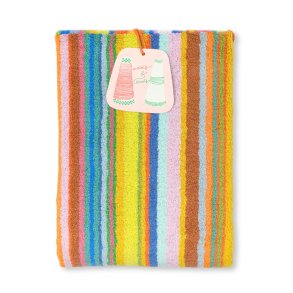
Bath Towel #112 - Ribbons Switch

Bath Towel #112 - Ribbons Switch

Foekje Fleur

FOF-78197


Odds & Ends
Colourful home textiles – made from surplus materials from industry

When factories dye yarn for textile production, they often make extra stock just to be safe – but a great deal of that yarn ends up unused. Odds & Ends textiles are designed to make full use of these leftovers, creating endless, unexpected colour combinations.

Collections & Colours
The Odds & Ends collections are produced in batches. The factory gathers surplus materials and uses those colours to create a new design, which is then put into production. The exact design is only the starting point – during production some of the leftover materials run out and are replaced with similar colours.

The images you see are therefore an indicative representation of how the textiles look, but there will be small variations within each batch.

Colours may vary
Because these textiles are produced in small batches from surplus materials, the colours may vary. The overall colour palette is always kept, however, so textiles within the same colour family combine easily. The product you receive may be identical to the images on this page, or show small variations from them.

Packaging
Each item comes with a cardboard hangtag or sleeve designed by Rachel Sender.

Washing and care
All Odds & Ends textiles can be washed at 60°C on the cotton programme together with similar colours. Washing at 30°C makes them last longer. To keep the colours intense, we recommend an organic detergent for coloureds.

To extend the life of the textiles, air drying is recommended, but terry products such as soft towels – especially those with a velour surface – can benefit from the occasional tumble dry on medium heat, which softens the fibres without the need for fabric conditioner.

If you live in an area with hard water, you can soften both your textiles and your washing machine by adding citric acid or vinegar to the rinse cycle from time to time.

Loose threads
This product is woven with terry loops to give it a soft and absorbent quality. Newly woven terry loops can be more prone to loose threads, so take care with jewellery the first few times you use it.

If a thread does come loose, never pull it! Snip it off carefully with sharp scissors – this will prevent further loose threads and does not affect the woven structure of the textile. After the first couple of washes the fibres become more resistant to snagging.


38.50 €

Show product
News
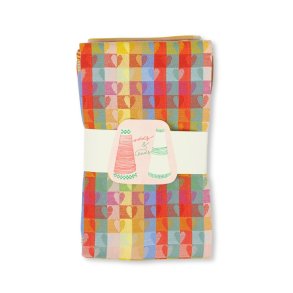
Foekje Fleur tea towel and kitchen towel #115 Other half with half hearts in a coloured check

Tea Towel and Kitchen Towel #115 - Other half - 2 pcs

Foekje Fleur

FOF-14416


Odds & Ends
Colourful home textiles – made from surplus materials from industry

When factories dye yarn for textile production, they often make extra stock just to be safe – but a great deal of that yarn ends up unused. Odds & Ends textiles are designed to make full use of these leftovers, creating endless, unexpected colour combinations.

Collections & Colours
The Odds & Ends collections are produced in batches. The factory gathers surplus materials and uses those colours to create a new design, which is then put into production. The exact design is only the starting point – during production some of the leftover materials run out and are replaced with similar colours.

The images you see are therefore an indicative representation of how the textiles look, but there will be small variations within each batch.

Colours may vary
Because these textiles are produced in small batches from surplus materials, the colours may vary. The overall colour palette is always kept, however, so textiles within the same colour family combine easily. The product you receive may be identical to the images on this page, or show small variations from them.

Packaging
Each item comes with a cardboard hangtag or sleeve designed by Rachel Sender.

Washing and care
All Odds & Ends textiles can be washed at 60°C on the cotton programme together with similar colours. Washing at 30°C makes them last longer. To keep the colours intense, we recommend an organic detergent for coloureds.

To extend the life of the textiles, air drying is recommended, but terry products such as soft towels – especially those with a velour surface – can benefit from the occasional tumble dry on medium heat, which softens the fibres without the need for fabric conditioner.

If you live in an area with hard water, you can soften both your textiles and your washing machine by adding citric acid or vinegar to the rinse cycle from time to time.

Loose threads
This product is woven with terry loops to give it a soft and absorbent quality. Newly woven terry loops can be more prone to loose threads, so take care with jewellery the first few times you use it.

If a thread does come loose, never pull it! Snip it off carefully with sharp scissors – this will prevent further loose threads and does not affect the woven structure of the textile. After the first couple of washes the fibres become more resistant to snagging.


29.50 €

Show product
News
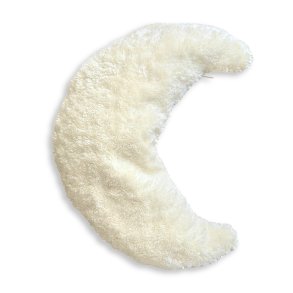
Cherry stone heat pillow in a cuddly toy - Moon

Cherry stone heat pillow in a cuddly toy - Moon

Senger Naturwelt

SEN-80180


How to warm the pillow
Open the zip along the inner edge of the moon and take the cherry stone pillow out. Only the pillow may be heated - never the whole toy.

In the microwave: no more than 600 W for half a minute to a minute. In the oven: 75 degrees for 3-5 minutes. Always test it against your own hand afterwards, and put the pillow back inside the toy before giving it to a child.

Important about the heat
Never warm the pillow for longer or at a higher setting than stated. If it gets too hot there is a risk of burning the skin, a risk of overheating for infants, and a risk that the pillow itself starts to burn.

Check the temperature against your own hand every single time, even once you know the timing of your own microwave. Output varies from oven to oven.

Manufacturer's warning
Not suitable for premature infants and children under 2 months. Risk of overheating. Always check the temperature by hand before use.

Organic cotton with a certificate
The cotton is certified to GOTS under certificate number CERES-11932. GOTS sets requirements both for how the cotton is grown and for the processing - dyeing, weaving and sewing - and the certificate can be looked up with the certifying body.

Washing
The cover unzips and can be hand-washed. The cherry stone pillow must not be washed - neither by hand nor in a machine. The stones cannot dry all the way through.


25.60 €

Show product
News
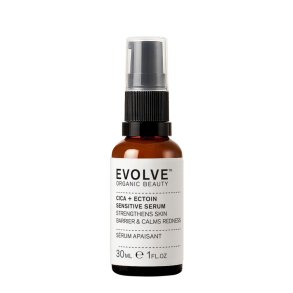
CICA + Ectoin Sensitive Serum - serum for sensitive skin

CICA + Ectoin Sensitive Serum - serum for sensitive skin

Evolve Organic Beauty

EVO-44292


How to use it
Gently apply one pump of serum to cleansed face and neck, morning and evening.

Ectoin
Ectoin is an amino acid derivative that microorganisms in extreme desert environments produce to survive drought, salt and heat. In skincare it is used to help skin withstand stressors such as pollution and temperature changes, and to support the skin barrier over time.

Centella and chaga
Centella asiatica - known in Korean skincare as CICA - is a plant long used to soothe sensitive skin and calm the look of redness and irritation. Chaga is a mushroom that grows on birch trees in the Nordic forests; its extract is rich in polyphenols that help protect the skin and even out skin tone.

Ceramides and hyaluronic acid
Ceramide NP - also known as ceramide III - is a lipid that matches the ones skin holds in its own barrier. It strengthens the barrier and reduces moisture loss, so skin feels smoother and more resilient. Sodium hyaluronate is a form of hyaluronic acid that binds moisture in the upper layers of the skin.

Certification
The serum is COSMOS ORGANIC certified and vegan. The ingredients are listed in their own field on this page.


46.40 €

Show product
News Sale
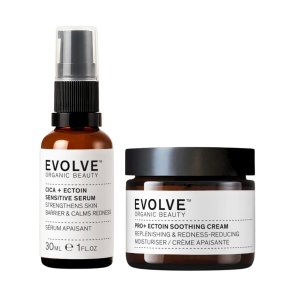
Evolve Calm and Strengthen Sensitive Skin Duo with CICA Ectoin serum and Pro Ectoin cream

Sensitive Skin Duo - Serum and moisturiser for sensitive skin

Evolve Organic Beauty


How to use the set
Apply one pump of serum to cleansed face and neck, morning and evening. Follow with a generous amount of cream as the final skincare step - before SPF in the morning and as an overnight moisturiser in the evening.

CICA + Ectoin Sensitive Serum
A lightweight serum with Ectoin, centella asiatica and chaga that calms visible redness and strengthens the skin barrier. Ceramide NP and hyaluronic acid help skin hold on to moisture.

Pro+ Ectoin Soothing Cream
A rich cream with Ectoin, shea butter and camellia oil that brings comfort to dry and sensitive skin. Ceramide NP matches the lipids in skin's own barrier, and low molecular weight hyaluronic acid delivers lasting hydration.

What they share
Ectoin is an amino acid derivative that microorganisms in extreme desert environments produce to survive drought and heat. In skincare it is used to make skin more resilient to everyday stress. Both products also contain chaga extract and ceramides, so they build on each other rather than repeat each other.

Certification
Both products are COSMOS Organic certified and vegan. The ingredients are listed in their own field on this page.


69.50 €

55.60 €

Show product
News
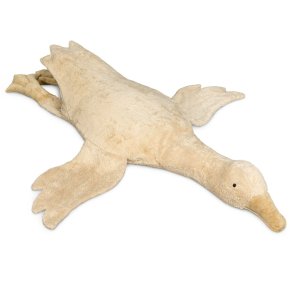
Heatable soft toy - Goose XL - Linen

Heatable soft toy - Goose XL - Linen

Senger Naturwelt

SEN-81651


How to warm the spelt pillow
Take the pillow out through the opening in the goose's belly. Warm it in the oven at a maximum of 75°C for about 2-3 minutes, or place it on a warm radiator. Never heat the pillow in a microwave, as the spelt husks can burn. Always check that the pillow is not too hot before putting it back inside the goose.

The difference between the small and the large goose
The small goose from Senger Naturwelt has a heat pillow filled with grape seeds, while the XL goose has a pillow filled with spelt husks. That is why the heating instructions differ: the small pillow can go in the microwave, while the pillow in the XL goose may only be warmed in the oven or on a radiator.

Materials
The outer fabric is organic cotton, certified to GOTS (Global Organic Textile Standard) by the certification body CERES (licence 11932). The goose is filled with pure sheep's wool, and the heat pillow contains spelt husks.

Care
Take out the spelt pillow before washing the goose. The cover can be hand washed.

Size and use
At approx. 90 x 30 x 57 cm, the XL goose is big enough to lean against, sit on as a floor cushion or stand as a calm feature in a child's room. Senger Naturwelt describes it as a loyal companion that quickly becomes part of family life.


203.50 €

Show product
News
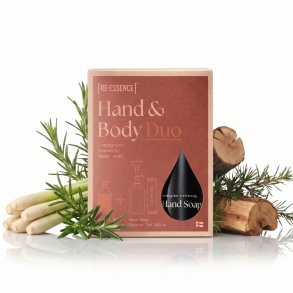
Hand Wash & Lotion Gift Set - Lemongrass, Rosemary & Cedarwood

Hand Wash & Lotion Gift Set - Lemongrass, Rosemary & Cedarwood

RE-ESSENCE

REE-00830


What's in the box
A glass bottle with pump for hand soap, one 27 g powder refill that makes 340 ml of hand soap, a collapsible silicone funnel and a 240 ml Hand & Body Lotion in a glass bottle with pump.

How to mix the hand soap
Fill the glass bottle with lukewarm water up to the line on the back. Pour in the whole refill using the funnel, then gently turn the bottle upside down and back for 30 seconds. Avoid shaking it, as this makes the soap foam. The soap is ready to use after about 30 minutes and fully developed after about 24 hours, so turn the bottle a few more times in between.

The ingredients
The hand soap is made from 98% ingredients of natural origin, and its cleansing agent is Sodium Coco-Sulfate, derived from coconut. The lotion contains 98% natural ingredients, 25% of which are organically grown. The scent comes from essential oils of lemongrass, rosemary and cedarwood, and all RE-ESSENCE products are vegan. Essential oils can irritate very sensitive skin.

Caring for the glass bottle
Rinse the glass bottle before refilling it, and wash it by hand rather than in the dishwasher so it keeps its looks for as long as possible.


56.60 €

Show product
News
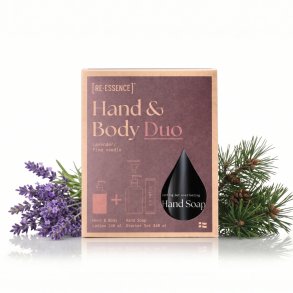
Hand Wash & Lotion Gift Set - Lavender & Pine Needle

Hand Wash & Lotion Gift Set - Lavender & Pine Needle

RE-ESSENCE

REE-00847


What's in the box
A glass bottle with pump for hand soap, one 27 g powder refill that makes 340 ml of hand soap, a collapsible silicone funnel and a 240 ml Hand & Body Lotion in a glass bottle with pump.

How to mix the hand soap
Fill the glass bottle with lukewarm water up to the line on the back. Pour in the whole refill using the funnel, then gently turn the bottle upside down and back for 30 seconds. Avoid shaking it, as this makes the soap foam. The soap is ready to use after about 30 minutes and fully developed after about 24 hours, so turn the bottle a few more times in between.

The ingredients
The hand soap is made from 98% ingredients of natural origin, and its cleansing agent is Sodium Coco-Sulfate, derived from coconut. The lotion contains 98% natural ingredients, 25% of which are organically grown. The scent comes from essential oils of lavender and pine needle, and all RE-ESSENCE products are vegan. Essential oils can irritate very sensitive skin.

Caring for the glass bottle
Rinse the glass bottle before refilling it, and wash it by hand rather than in the dishwasher so it keeps its looks for as long as possible.


56.60 €

Show product
News Sale
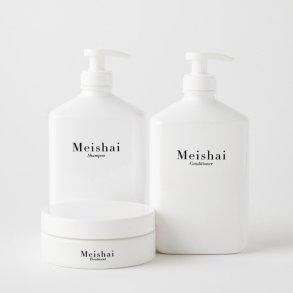
The Meishai Experience - Shampoo, Hair Treatment & Conditioner - Fragrance-Free

The Meishai Experience - Shampoo, Hair Treatment & Conditioner - Fragrance-Free

Meishai

MEI-59128


Step 1: Shampoo
Wash your hair twice. The first wash removes residue from hair and scalp and does not lather much, so add a little water rather than more shampoo as you massage the scalp. The second wash gives a soft lather and the full caring effect. Rinse thoroughly. The shampoo contains glycerin and Pentavitin® (Saccharide Isomerate), among others, which help the scalp hold on to moisture.

Step 2: Hair treatment
Squeeze the water out of your hair with a towel, as dripping wet hair dilutes the treatment. Apply it from the tips up through the lengths, keeping it off the scalp, and leave it on for at least 5-7 minutes, or longer. Rinse thoroughly. The treatment contains Rep'Hair®, a plant-based, ceramide-like ingredient that strengthens hair and adds shine, plus almond oil and coconut oil, which nourish and make hair easier to comb.

Step 3: Conditioner
Apply the conditioner from the tips upwards, again avoiding the scalp, and use a little less than usual. Work it through with your fingers or a wide-toothed comb, leave it for 1-2 minutes and rinse thoroughly. Almond oil and glycerin nourish and protect the hair against dryness.

Certified for sensitive skin
All products in the set are certified by Asthma Allergy Nordic and have been rated A in Kemiluppen by the Danish Consumer Council's Tænk Kemi. They are fragrance-free and vegan.


149.10 €

128.70 €

Show product
News
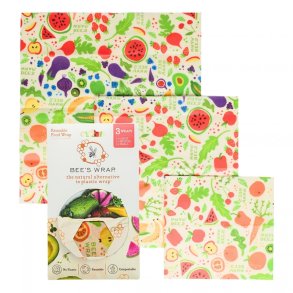
Bee's Wrap beeswax wraps set - Garden Party - 3 Pack

Bee's Wrap beeswax wraps set - Garden Party - 3 Pack

Bee's Wrap

BEE-75675


Sizes
Small: approx. 18 x 20 cm (7 x 8 in), for half a lemon, an avocado or a piece of cheese.
Medium: approx. 25 x 28 cm (10 x 11 in), for a sandwich or a small bowl.
Large: approx. 33 x 36 cm (13 x 14 in), for bread or a large bowl.

How to care for your beeswax wraps
Wash the wrap in cool water with a mild washing-up liquid and let it air dry, for example on a drying rack. Keep it away from heat: hot water, microwaves, ovens and hot cars will melt the wax.

When is it worn out?
Once the wrap has become thin and no longer sticks well to itself, it is time for a new one. With regular use and the right care, it lasts up to a year.


29.50 €

Show product
News
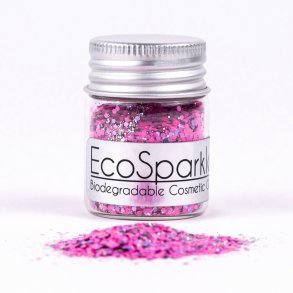
Biodegradable glitter - Pink Kiss

Biodegradable glitter - Pink Kiss

EcoSparkles

ESP-20671


What the glitter is made of
The glitter consists of 90% cellulose, 8% styrene as a coating, 0.1% aluminium and cosmetic pigments. It is vegan, and none of the ingredients are genetically modified.

How to use it
EcoSparkles makes the glitter both for decorating skin and hair and for creative projects. The mix contains both fine and chunky grains, giving a lively effect whether you wear it on your face for a party or use it on a card, a drawing or a Christmas decoration.


12.20 €

Show product
News
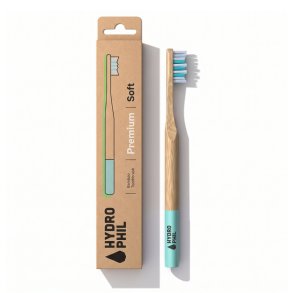
Premium Bamboo Toothbrush - Soft

Premium Bamboo Toothbrush - Soft

HYDROPHIL

HYD-93879


When to replace it
Replace the toothbrush after 3 months at the most, or when the bristles start to splay. Replace it after illness too.

Storage
Bamboo does best when it can dry. Leave the toothbrush to dry after use, and carry it in a breathable case when travelling.


5.00 €

Show product
News
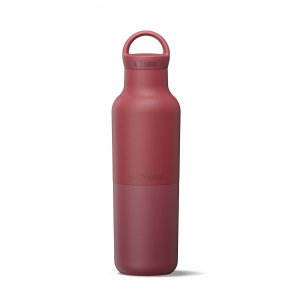
Insulated water bottle with screw cap - 592 ml - Cashmere Rose

Insulated water bottle with screw cap - 592 ml - Cashmere Rose

Klean Kanteen

KLK-85953


Insulation
Drinks stay hot for up to 22 hours and iced for up to 65 hours. The actual time depends on how hot or cold the drink is to begin with and how often the bottle is opened.

Materials
The bottle itself is double-wall, vacuum-insulated 18/8 stainless steel. The cap is polypropylene with a silicone seal.

Care
The bottle is dishwasher safe. Bottles with a printed design should be washed by hand to keep the print intact.


50.10 €

Show product
News
Insulated water bottle with screw cap - 592 ml - Garnet

Insulated water bottle with screw cap - 592 ml - Garnet

Klean Kanteen

KLK-85946


Insulation
Drinks stay hot for up to 22 hours and iced for up to 65 hours. The actual time depends on how hot or cold the drink is to begin with and how often the bottle is opened.

Materials
The bottle itself is double-wall, vacuum-insulated 18/8 stainless steel. The cap is polypropylene with a silicone seal.

Care
The bottle is dishwasher safe. Bottles with a printed design should be washed by hand to keep the print intact.


50.10 €

Show product
News
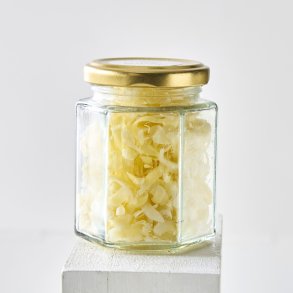
Foot soak soap flakes - with rosemary

Foot soak soap flakes - with rosemary

Kystnær

KYS-11159


How to use
Fill a foot bath with warm water and add one tablespoon of soap flakes. Dissolve the flakes by hand or whisk them for extra foam. Rest your feet in the water for 10-15 minutes, dry them well and finish with your favourite foot cream.

Storage
Keep the jar out of direct sunlight, as the soap flakes do not tolerate it.


12.80 €

Show product
News
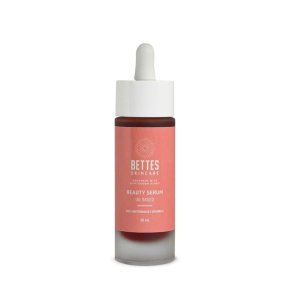
Bettes Beauty Serum - Face Oil with Sea Buckthorn and Q10 - 30 ml

Bettes Beauty Serum - Face Oil with Sea Buckthorn and Q10 - 30 ml

Bettes Handmade Skincare

BET-SERUM


How to use
Cleanse your skin, then press or massage 2 drops into your face, neck and décolleté while the skin is still damp from Skin Dew or water. Use the serum in the evening so it can work overnight. For very dry skin, you can also use it during the day under Beauty Cream.

Sea buckthorn and Q10
The sea buckthorn oil comes from both the seeds and the fruit. Q10 (Ubiquinone) is a coenzyme, and together with vitamin E and rosemary it contributes to the serum's antioxidant content.

Good to know
The serum can stain fabrics. Use only a small amount and let it absorb fully before your skin comes into contact with clothing or bedding.


50.10 €

Show product
News
Kapok Mattress for the Oliver Wood Mini+ cot bed

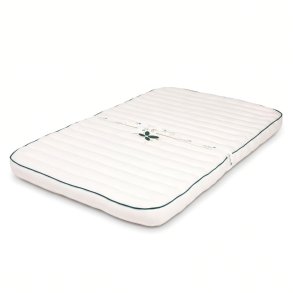
Kapok Mattress for the Oliver Wood Mini+ cot bed

Cocoon Company

MAT-068122


Why kapok?
The kapok fibre is a thin-walled, hollow tube filled with up to 80% air. That makes it extremely light – only about an eighth of the weight of cotton – and breathable at the same time. The fibre has a natural waxy coating that makes it water-repellent, so it does not soak up moisture. Instead, moisture and heat can escape from the body, which is why a kapok mattress is known for a dry, even sleeping climate where you are neither clammy, cold nor too warm.

Handmade in India
The fibre is filled and sewn by hand by local craftspeople in India, and the cover is GOTS-certified organic cotton.

Tested to EU safety requirements
The mattress has been tested and approved to the European standard for children's mattresses, EN 16890:2017+A1:2021.

Size
The mattress measures 68x122 cm. It is filled and sewn by hand, so the dimensions may vary slightly.

Caring for the mattress
Stand the mattress on its side now and then so it can air out. Like a futon, kapok is a loose natural fibre, so at the same time massage the fibre from the edges towards the middle, where the mattress takes the most weight. That way it keeps its shape and does not form a hollow.


180.30 €

Show product
News
Fluoride-free toothpaste - strengthen enamel - Calcimax

Fluoride-free toothpaste - strengthen enamel - Calcimax

Biomed

BIO-70096


How to use
Brush your teeth for at least 2 minutes twice a day. The toothpaste can be used by children from 6 years.

Hydroxyapatite and arginine
Hydroxyapatite is a calcium phosphate that tooth enamel is mainly made of. In Calcimax it works together with the amino acid L-arginine, and according to biomed the two ingredients help rebuild weakened enamel and ease sensitive teeth.

Algae and clay
Extracts of the brown algae sugar kelp (Laminaria saccharina) and bladderwrack (Fucus vesiculosus), as well as spirulina, are added together with kaolin, a fine clay. According to biomed, the algae, clay and thyme support circulation in the gums.

Plantain and birch leaves
Extracts of plantain and birch leaves are classic plant ingredients in oral care, and in Calcimax they are included to soothe the gums. The toothpaste is sweetened with stevia and flavoured with peppermint oil and thyme oil.

Certified and clinically tested
The toothpaste is certified natural, gluten-free and vegan by the Biorius laboratory and has been clinically tested at CELLnTEC Advanced Cell Systems AG in Switzerland.

Storage
Keep the tube out of direct sunlight and out of reach of small children.


5.00 €

Show product
News
Fluoride-free toothpaste - for sensitive teeth - Sensitive

Fluoride-free toothpaste - for sensitive teeth - Sensitive

Biomed

BIO-70072


How to use
Brush your teeth for at least 2 minutes twice a day. The toothpaste can be used by children from 6 years.

Hydroxyapatite and arginine
Hydroxyapatite is the calcium phosphate that tooth enamel is mainly made of. In Sensitive it is combined with the amino acid arginine, and according to biomed the hydroxyapatite strengthens the enamel so teeth become less sensitive to things like cold, heat and sweets.

Plant extracts for the gums
According to biomed, plantain extract, polyphenols from birch leaves and red grape seed extract strengthen the gums. The recipe also includes oak bark and thyme extracts as well as thyme, lemon and peppermint oils.

Natural ingredients
The toothpaste consists of 98% natural ingredients. It is certified to the Biorius standard for natural ingredients, organic essential oils and cosmetics, and it is sweetened with stevia.

Storage
Keep the tube out of direct sunlight and out of reach of small children.


5.00 €

Show product