




Quick delivery: 2-4 days
Free shipping to parcel shop above 140 €
We support Plant A Tree

Intimate care

Organic intimate care products
The opportunity to switch from disposable products to a sustainable alternative is gradually spreading to the vast majority of aspects of our daily lives, and of course we celebrate that here at us.  That is why we also have a wide range of products in the intimate care category, where you can find organic and organic products such as condoms, cloth pads and disposable pads and tampons.

Baby wet wipes in organic cotton - 50 pcs

Natracare

NAC-00112


Nourishing Plant Extracts

  • Organic Chamomile: Calms and Relieves Redness
  • Organic Apricot Oil: Rebuilds and Softens the Skin
  • Organic Sweet Almond Oil: Provides Extra Protection and Flexibility


Ingredients
Water, Brassica Campestris Seed Oil, Glycerin, Lauryl Glucoside, Polyglyceryl-2-dipolyhydroxystearate, Prunus Armeniaca Kernel Oil *, Levulinic Acid, Parfum (Citrus Dulcis Extract (Orange), Amyris Balsamifera Bark Oil, Coriandrum Sativum Fruit Oil (Coriander), Juniperus Virginiana (Juniper), Citrus Bergamia Peel Oil Expressed (Bergamot), Citrus Amara (Bitter Orange), Piper nigrum Oil (Black Pepper), Sodium Levulinate, Sodium Chloride, Chamomilla Recutita Flower Extract (Chamomile)*, Maltodextrin, Prunus Amygdalus Dulcis (Sweet Almond) Oil*, Tocopherol (Vitamin E), Helianthus Annuus Seed Oil (Sunflower), Potassium Sorbate, Glyceryl Oleate, Dicapryl Carbonate, Sodium Phytate, Limonene**, Linalool**

* Organic ingredient
** Naturally occurring in the essential oils

Packaging

Recyclable BPA-free plastic


6.60 €

Show product

Menstrual disk - Light Flow

Women's Place

WOP-94306


Menstruation is a natural part of life, but it can be difficult to find hygiene products that neither leak nor need to be changed frequently. The menstrual pad offers a flexible, reusable solution that collects menstrual blood instead of absorbing it – and provides up to 12 hours of protection. The disk is free of harmful chemicals, and the Light Flow version is perfect for days with light bleeding, where it can give you peace of mind throughout the day.

What is a menstrual disk?
The menstrual disk is made of soft, medical silicone and is placed in the vagina just below the cervix. Instead of sucking up blood like a tampon or pad, it collects the menstrual fluid, which makes it particularly suitable for long days, nights and physical activity.

Most women lose between 30–80 ml of blood during menstruation (approx. 2–5 tbsp.), but the amount of bleeding varies from person to person. That is why the menstrual disk is available in two sizes:

  • Light Flow: Capacity 30 ml. Suitable for light bleeding, younger than 25 years or the days when the bleeding is less.

  • Medium/Heavy Flow: Capacity 45 ml. Suitable for heavier bleeding, women over 25 years or days with extra need for capacity


Advantages of the Menstrual Disc

  • Long-lasting protection: Up to 12 hours (30–45 ml depending on size).

  • No leaks: The soft silicone edge of the disc forms a tight seal against the vaginal wall – also during sports and exercise.

  • Discreet and comfortable: When it fits correctly, you don't feel it – you can wear all kinds of clothes without worrying about visible lines.

  • Can be used during intercourse: the low position of the disc means that neither you nor your partner will be able to feel it. Note that it does not act as contraception or protect against STDs.

  • Zero Waste: Replace disposable pads and tampons with a reusable disc. With proper care, a menstrual pad can last for several years, which significantly reduces your waste.

  • Easy to clean: Rinse under cold or lukewarm water after each emptying. Sterilize by boiling for a few minutes between cycles for optimal hygiene.


How to use the Menstrual Disc

  1. Insertion: Fold the disc together (two indentations on each side) and insert into the vagina until the edge sits under the cervix. Gently push the base behind your pubic bone so the disc unfolds and forms a tight seal.

  2. Removal: Grasp the “handle” or squeeze the edge lightly to break the seal. Pull out the disc, empty the contents into the toilet, rinse it with clean water and insert again if necessary.

  3. Cleaning: After each cycle, boil the disc for 2–3 minutes and let it air dry on a clean surface. Then store it dry and away from direct sunlight.


Who can use the menstrual disk?
The menstrual disk is suitable for most women – regardless of age, bleeding pattern or lifestyle. Choose the right size (Light Flow or Medium/heavy Flow) and follow the user instructions carefully for the best protection, comfort and freedom during your menstrual period.

Try the Menstrual Disk today and experience how simple and conscious your monthly hygiene can be.


32.10 €

Show product

Menstrual disk - Medium & Heavy Flow

Women's Place

WOP-94313


Menstruation is a natural part of life, but it can be difficult to find hygiene products that neither leak nor need to be changed frequently. The menstrual pad offers a flexible, reusable solution that collects menstrual blood instead of absorbing it – and provides up to 12 hours of protection. The disk is free of harmful chemicals, and the Light Flow version is perfect for days with light bleeding, where it can give you peace of mind throughout the day.

What is a menstrual disk?
The menstrual disk is made of soft, medical silicone and is placed in the vagina just below the cervix. Instead of sucking up blood like a tampon or pad, it collects the menstrual fluid, which makes it particularly suitable for long days, nights and physical activity.

Most women lose between 30–80 ml of blood during menstruation (approx. 2–5 tbsp.), but the amount of bleeding varies from person to person. That is why the menstrual disk is available in two sizes:

  • Light Flow: Capacity 30 ml. Suitable for light bleeding, younger than 25 years or the days when the bleeding is less.

  • Medium/Heavy Flow: Capacity 45 ml. Suitable for heavier bleeding, women over 25 years or days with extra need for capacity


Advantages of the Menstrual Disc

  • Long-lasting protection: Up to 12 hours (30–45 ml depending on size).

  • No leaks: The soft silicone edge of the disc forms a tight seal against the vaginal wall – also during sports and exercise.

  • Discreet and comfortable: When it fits correctly, you don't feel it – you can wear all kinds of clothes without worrying about visible lines.

  • Can be used during intercourse: the low position of the disc means that neither you nor your partner will be able to feel it. Note that it does not act as contraception or protect against STDs.

  • Zero Waste: Replace disposable pads and tampons with a reusable disc. With proper care, a menstrual pad can last for several years, which significantly reduces your waste.

  • Easy to clean: Rinse under cold or lukewarm water after each emptying. Sterilize by boiling for a few minutes between cycles for optimal hygiene.


How to use the Menstrual Disc

  1. Insertion: Fold the disc together (two indentations on each side) and insert into the vagina until the edge sits under the cervix. Gently push the base behind your pubic bone so the disc unfolds and forms a tight seal.

  2. Removal: Grasp the “handle” or squeeze the edge lightly to break the seal. Pull out the disc, empty the contents into the toilet, rinse it with clean water and insert again if necessary.

  3. Cleaning: After each cycle, boil the disc for 2–3 minutes and let it air dry on a clean surface. Then store it dry and away from direct sunlight.


Who can use the menstrual disk?
The menstrual disk is suitable for most women – regardless of age, bleeding pattern or lifestyle. Choose the right size (Light Flow or Medium/heavy Flow) and follow the user instructions carefully for the best protection, comfort and freedom during your menstrual period.

Try the Menstrual Disk today and experience how simple and conscious your monthly hygiene can be.


32.10 €

Show product
Sold out
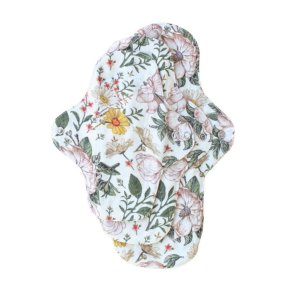
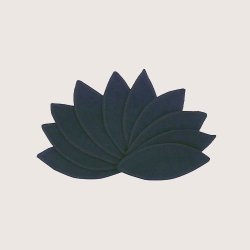
Stofbind starter pack - Flower

Stofbind starter pack - Flower

Women's Place

WOP-94221


A woman uses around 3500–3700 disposable pads and tampons over a 10-year period. With cloth pads that have a lifespan of approximately 10 years, you can make do with only 15–20 pads in the same period - depending on use, washing and bleeding.

You also get rid of bleaches, glues and perfumes, which many find cause itching, irritation and rashes. Cloth pads offer a clean, soft and durable solution for your period.

Sizes and quantities

Cloth pads from Women's Place are available in four sizes:

  • 20 cm (panty liners)
  • 25 cm (day pads)
  • 30 cm (night pads)
  • 40 cm (postpartum pads or longer night pads)

Most women use approximately 3–6 panty liners, 9–12 day pads and 3–6 night pads during a menstrual period, depending on how often they wash. If you are unsure, you can start with our starter pack, which contains three different sizes.

Material and construction

  • 100% organic GOTS-certified cotton
  • 4 layers of absorbent cotton
  • 1 layer of PUL-coated fabric (waterproof)

This makes the pads as dense and absorbent as disposable pads, but without unnecessary chemicals.

Handling and use

  1. Direction: The front has two vertical seams; the back is marked with “Women’s Place”. Place the back side down against the briefs, fold the wings under and close with buttons at the back. The top cotton­ layers should face the skin, while the PUL-coated layer should face down.

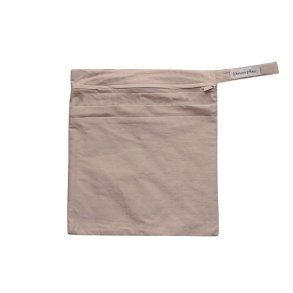
  2. After use: Rinse off the worst blood in cold water under the shower if possible— it preserves the life of the bandage best. If you do not rinse immediately, you can put the bandage in a wetbag (waterproof and odorproof bag) until washing. A strong odor does not form when stored in a wetbag.


Washing cloth napkins

  1. Pre-wash (cold rinse): If you have not already rinsed the napkins one at a time, you can put them directly in the washing machine on a cold rinse program or hand wash them under the shower.

  2. Main wash (60 °C): Wash the bandages together with other household laundry at 60 °C.

    • Avoid bleaches and fabric softeners – these can damage both cotton and waterproof PUL.

  3. Drying: Hang the bandages to air dry. Do not use a tumble dryer, as the heat can destroy the waterproof coating.

  4. When the pads are completely dry, they are ready for reuse.


23.10 €

Show product

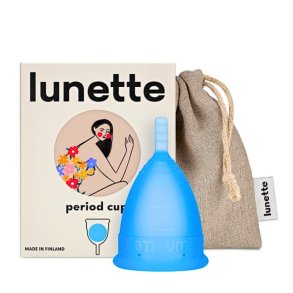
Lunette menstrual cup - Blue - size 2

Lunette

LUN-61022


High quality: Lunette is known for its flexible silicone that unfolds easily when inserted, making it user-friendly for both beginners and experienced users.

High comfort: The cup's delicious material and the flat stem can be easily cut to the desired length for optimal comfort when removal.

Long durability: With proper care, your Lunette menstrual cup can last for many years, which reduces the need for disposable products and reduces the environmental impact.

The menstrual cup is available in two sizes

Size. 1 is generally recommended for women who have not given birth yet and size 2 if you have given birth.

But it can still be a bit individual.

This menstrual cup is in size 2 and can hold 28 ml.

It measures 5.2 cm. in length and 4.6 cm. in diameter.

Use

The menstrual cup must be boiled before use and after each menstrual period.

During the menstrual period itself, it is enough to rinse the cup under lukewarm water when it is emptied.

The packaging is made of cardboard and cellulose plastic. It is both recyclable and compostable.


30.80 €

Show product

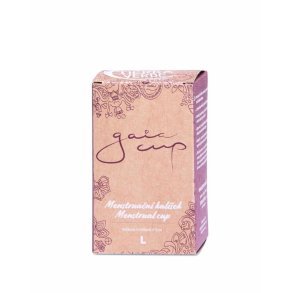
Gaia menstrual cup - Large

Tierra Verde

TIV-02013


How to use the cup

  • Wash your hands. Fold the cup (e.g. U-fold).
  • Insert in a comfortable position and release so that the rim can unfold completely.
  • Check for a vacuum by running a finger around the rim.
  • Empty as needed. For heavy flow, typically 2–3 times a day; for light days, it can be worn for up to 10–12 hours.


Cleaning & storage

  • Rinse with warm water after each emptying.
  • For a safe start to the cycle: boil for 2–5 minutes.
  • Avoid aggressive agents (e.g. chlorine) as they can damage the silicone.
  • After the cycle: wash thoroughly, dry and store in a cotton bag – not in plastic.
  • Colour change over time is normal and does not affect function.
  • Cleaning powder can be used as directed for thorough cleaning.


If the cup leaks or is difficult to remove

  • Leaks are most often caused by the cup not being fully unfolded or sitting too high. Try a different fold, adjust the position or choose a different size.
  • When removing: relax your pelvic floor, gently squeeze the base to break the vacuum, and slowly pull out.


Safety

  • Always wash your hands before insertion/removal.
  • Not a contraceptive. Remove the cup before sexual intercourse.
  • If you experience symptoms consistent with Toxic Shock Syndrome (e.g. sudden fever, rash, vomiting, diarrhoea, dizziness), remove the cup immediately and contact a doctor.
  • Keep out of reach of children and pets.

25.60 €

Show product

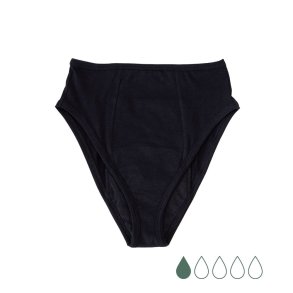
Period pants - Tala - Light absorbency

Hala Collective


Materials

  • Briefs: 92% organic cotton, 8% elastane
  • Gusset, skin layer: 50% organic cotton, 50% TENCEL™ micromodal
  • Gusset, membrane: 100% PUL


Care

  • Wash 1-3 times before first use for best absorption
  • Rinse cold after wear until water runs clear
  • Machine wash 30 °C with regular laundry
  • Air-dry (no pegs/tumble dryer)
  • No bleach or ironing (heat damages the membrane)

38.50 €

Show product
Sale
Period pants - Yara - Light absorbency

Period pants - Yara - Light absorbency

Hala Collective


Materials

  • Briefs: 92% organic cotton, 8% elastane
  • Gusset, skin layer: 50% organic cotton, 50% TENCEL™ micromodal
  • Gusset, membrane: 100% PUL


Care

  • Wash 1-3 times before first use for best absorption
  • Rinse cold after wear until water runs clear
  • Machine wash 30 °C with regular laundry
  • Air-dry (no pegs/tumble dryer)
  • No bleach or ironing (heat damages the membrane)

38.50 €

30.80 €

Show product
News
Reusable sanitary pads - Active with wings - TorTex 37.5® - Blue

Reusable sanitary pads - Active with wings - TorTex 37.5® - Blue

Imse Vimse

IMV-02593


How much is 15 ml?
Active Regular holds approximately 15 ml. For comparison, a normal period is 30-40 ml in total over the entire cycle, with the most on days two and three.

In practice, this means that Regular is suitable for a moderate flow. In Imse Vimse's range, it sits between the panty liner and the night pads, making it the model most people use the most of. On the first, heavy days, you will likely need to change more often or choose a larger model, and for the night, there is a longer night pad.

The wings and the popper

The pad has wings that fold around the gusset of the underwear and close with a popper underneath. This is a different logic to a disposable pad that sticks to the bottom of the underwear: here, the popper holds the pad in place, and the underwear holds it against the body. Therefore, fairly close-fitting underwear works better than loose ones.

The side with the visible stitching should face the skin.

What TorTex 37.5® is

The three absorbent layers are TorTex - a blend of hemp fibre, cotton fibre, and 37.5® polyester - plus a little elastane so the pad follows the body. The back is a waterproof PUL layer, meaning polyester laminated with polyurethane, the same material used in cloth nappies.

37.5® is a moisture management technology: particles in the fibre move moisture vapour away from the skin, so the surface feels drier. This is about comfort, not absorbency - that comes from the hemp and the cotton.

What has been tested
The fabric is cytotoxicity tested at Hohenstein, an accredited German textile institute, and the fabric suppliers are OEKO-TEX Standard 100 certified. The cytotoxicity test evaluates whether the material is compatible with living cells — relevant for a product that sits against mucous membranes for several days.

Washing

The manufacturer's instructions state: rinse in cold water after use, then wash at 60 degrees with similar colours.

The cold rinse is not a politeness tip. Hot water causes blood to coagulate and set in the fibres; cold water removes most of it before the pad even reaches the laundry basket.
 

  • No fabric softener. Fabric softener leaves a film on the fibres, causing the pad to repel liquid instead of absorbing it. This is the fastest way to ruin a cloth pad.
  • Do not tumble dry. Heat breaks down the PUL laminate, and then the pad will start to leak. Hang to dry.
  • No bleach, no ironing, no dry cleaning.


How many do you need?
With two in the pack, you can use one while the other is being washed. If cloth pads are to cover an entire period without washing in between, most people need five to seven in mixed sizes. This is worth knowing before buying one pack and being disappointed.

On the go

Used pads are folded with the wet side facing inwards and placed in a waterproof bag until you get home. Imse Vimse makes bags for this purpose.

The packaging

The box is FSC® MIX certified, licence code C155860, and should be sorted as paper.

Specifications

  • Model: Active Regular with wings
  • Capacity: approx. 15 ml
  • 3 absorbent layers in TorTex 37.5® (97 % TorTex, 3 % elastane) - hemp, cotton, 37.5® polyester
  • Waterproof backing: PUL, 100 % polyester laminated with polyurethane
  • Fastens with a popper under the underwear
  • Quantity: 2 pcs · Colour: blue
  • Washing: rinse cold, wash at 60 °C. No fabric softener, do not tumble dry
  • Design and distribution: Monthly of Sweden AB, Halmstad.
  • Made in Latvia

33.50 €

Show product
News
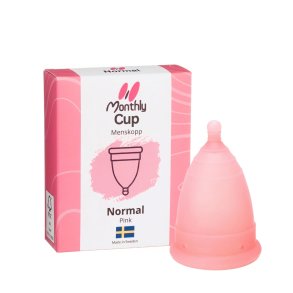
Menstrual cup Normal - MonthlyCup - 22 ml - Pink

Menstrual cup Normal - MonthlyCup - 22 ml - Pink

MonthlyCup

IMV-61960


How a menstrual cup works
A menstrual cup collects the blood instead of absorbing it, the way a tampon or a pad does. The same cup can be emptied, rinsed and used again - cycle after cycle for up to five years. If the cup sits correctly, it is leak-proof, and you can sleep, train and swim as normal.

The material

The cup is made of medical grade silicone. Silicone is produced from silicon, which is extracted from sand. These cups are pink and therefore contain up to 1% vegan pigment paste; the rest is medical grade silicone.

The routine: fold, insert, empty, repeat


  1. Wash hands and fold the cup. Press it together into a C. The C-fold is the most common to start with, but there are others, and most eventually find one that works best.
  2. Insert it, and let it unfold. The cup must sit completely inside the vagina, below the cervix. Feel around the base and check that it has unfolded.
  3. Empty according to your flow. Most people only need to empty it twice a day. If you have a heavy period, it must be done more often. Check more frequently in the beginning until you know your flow.
  4. Break the vacuum before you take it out. Gently pinch the base so the suction releases, and then take it out slowly. Do not pull on the stem alone.


Never leave the cup in for more than 12 hours
12 hours is the absolute limit, regardless of how little you bleed. Take the cup out, clean it, and put it back in. This is the single most important rule when using a menstrual cup, and it relates to the section below.

Good to know about TSS

Toxic shock syndrome is a very rare but serious condition that can occur in connection with menstruation. It is linked to bacteria that can multiply when menstrual blood sits stagnant in the body for a long time - and this is why the 12-hour limit exists.

If you suddenly get a high fever and feel very unwell while using the cup, take it out and seek medical advice.

The risk is small, and it becomes smaller when you wash your hands before every handling, stick to the 12-hour limit and clean the cup as described. But it is worth knowing before you start - not afterwards.

Cleaning


  • Before first use: boil the cup.
  • At each emptying: wash hands, empty the cup, and rinse it with mild soap and water before putting it back in.
  • Before or after each period: boil the cup again. If you cannot boil it in a pot, there are microwave bags for this purpose.
  • Twice a year: cleaning tablets remove discolouration. MonthlyCup's own tablets are based on sodium percarbonate and vegetable binders.


Let the cup dry completely, and store it in a breathable place. Replace the cup if the silicone becomes damaged, sticky or noticeably changes.


25.60 €

Show product
News
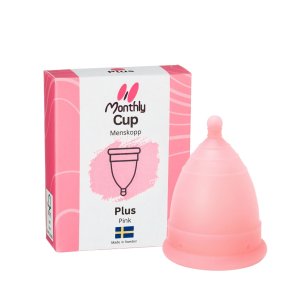
Menstrual cup Plus - MonthlyCup - 43 ml - Pink

Menstrual cup Plus - MonthlyCup - 43 ml - Pink

MonthlyCup

IMV-62080


How a menstrual cup works
A menstrual cup collects the blood instead of absorbing it, the way a tampon or a pad does. The same cup can be emptied, rinsed and used again - cycle after cycle for up to five years. If the cup sits correctly, it is leak-proof, and you can sleep, train and swim as normal.

The material

The cup is made of medical grade silicone. Silicone is produced from silicon, which is extracted from sand. These cups are pink and therefore contain up to 1% vegan pigment paste; the rest is medical grade silicone.

The routine: fold, insert, empty, repeat


  1. Wash hands and fold the cup. Press it together into a C. The C-fold is the most common to start with, but there are others, and most eventually find one that works best.
  2. Insert it, and let it unfold. The cup must sit completely inside the vagina, below the cervix. Feel around the base and check that it has unfolded.
  3. Empty according to your flow. Most people only need to empty it twice a day. If you have a heavy period, it must be done more often. Check more frequently in the beginning until you know your flow.
  4. Break the vacuum before you take it out. Gently pinch the base so the suction releases, and then take it out slowly. Do not pull on the stem alone.


Never leave the cup in for more than 12 hours
12 hours is the absolute limit, regardless of how little you bleed. Take the cup out, clean it, and put it back in. This is the single most important rule when using a menstrual cup, and it relates to the section below.

Good to know about TSS

Toxic shock syndrome is a very rare but serious condition that can occur in connection with menstruation. It is linked to bacteria that can multiply when menstrual blood sits stagnant in the body for a long time - and this is why the 12-hour limit exists.

If you suddenly get a high fever and feel very unwell while using the cup, take it out and seek medical advice.

The risk is small, and it becomes smaller when you wash your hands before every handling, stick to the 12-hour limit and clean the cup as described. But it is worth knowing before you start - not afterwards.

Cleaning


  • Before first use: boil the cup.
  • At each emptying: wash hands, empty the cup, and rinse it with mild soap and water before putting it back in.
  • Before or after each period: boil the cup again. If you cannot boil it in a pot, there are microwave bags for this purpose.
  • Twice a year: cleaning tablets remove discolouration. MonthlyCup's own tablets are based on sodium percarbonate and vegetable binders.


Let the cup dry completely, and store it in a breathable place. Replace the cup if the silicone becomes damaged, sticky or noticeably changes.


25.60 €

Show product
News
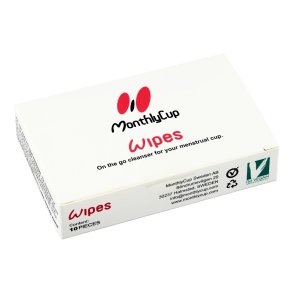
Disinfectant wipes for menstrual cups - 10 pack

Disinfectant wipes for menstrual cups - 10 pack

MonthlyCup

IMV-61380


What they solve
The most frequently asked question about menstrual cups is what to do in a public toilet. The answer is usually that you wipe the cup with toilet paper and rinse it the next time there is a sink - and for most, that is enough because the cup can stay in for many hours at a time.

But there are situations where there is no water at all: a campsite, a train toilet, a flight, a festival. That is what the wipes are for.

How to use them


  1. Wash your hands if you have the opportunity.
  2. Take the cup out and empty it.
  3. Wipe the cup with a wipe - both inside and outside, and remember the holes under the rim.
  4. Let the cup air dry completely before inserting it again. This step should not be skipped.
  5. Discard the wipe in the bin.


Why air drying is important
Alcohol evaporates quickly, but it must be allowed to do so. Mucous membranes tolerate alcohol less well than skin, and the cup must be dry when it goes back in. If you give it half a minute while you wash your hands or pack up, it is ready.

If you feel a stinging sensation when the cup is put back in, it was not dry enough. Take it out, let it finish drying, and try again.

They do not replace boiling or soap and water

This is a travel solution, not a routine. MonthlyCup's own recommendation is still:
 

  • Rinse the cup with mild soap and water at each emptying
  • Boil it before first use and again before or after each period


The wipes cover the gaps - not the basic cleaning.

Contents and safety

The wipes contain 77% isopropyl alcohol and 23% water. This makes them highly flammable, and they must be treated accordingly:
 

  • Keep out of reach of children
  • Do not expose to heat, hot surfaces, sparks, open flames or other ignition sources
  • No smoking during use
  • Keep the container tightly closed
  • Store in a cool, well-ventilated place


Disposal
Used wipes and packaging belong in residual waste - not in food waste or paper. The product is labelled with instructions for drop-off at the municipality's hazardous waste reception centre; this applies to remnants of the product itself, not the individual used wipe.


4.60 €

Show product
News
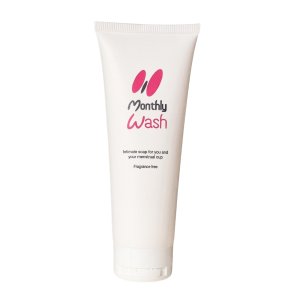
Feminine wash & menstrual cup cleanser

Feminine wash & menstrual cup cleanser

MonthlyCup

IMV-61502


One wash for two things
Most people who use a menstrual cup end up with two products on the bathroom shelf: something for the cup and something for themselves. Monthly Wash is intended as both, which in practice means one less thing to pack when traveling.

For the cup: use it with water at every emptying. For the intimate area: use it as a regular wash in the shower.

Externally - and only externally

Intimate wash is used on the vulva, meaning externally. The vagina cleanses itself, and internal rinsing is advised against by health authorities because it disrupts the natural flora. This applies to Monthly Wash as to any other intimate wash.

What is in it

The formulation is built on mild surfactants - cocamidopropyl betaine, sodium lauroyl sarcosinate, and sodium lauryl sulfoacetate - along with glycerin, which is moisture-retaining. Lactic acid and citric acid adjust the acidity, and phenoxyethanol acts as a preservative. It contains neither perfume nor colorants.

The packaging
The tube is made of bio-based polyethylene, where the raw material is sugarcane instead of crude oil. It is worth being precise about: the material is still plastic and does not break down in nature. The difference lies in what the plastic is made of, not how it is disposed of. The tube is sorted as plastic.

Soap does not replace boiling

Monthly Wash is for daily cleaning. The cup must still be boiled before the first use and before or after each menstruation. The order is:
 

  • At each emptying: rinse the cup with Monthly Wash and water
  • Before and after each menstruation: boil the cup
  • When there is no water: use disinfecting wipes


INCI
Aqua, Cocamidopropyl Betaine, Glycerin, Sodium Lauroyl Sarcosinate, Sodium Chloride, PEG-120 Methyl Glucose Trioleate, Propanediol, Caprylyl Glycol, Sodium Lauryl Sulfoacetate, Sodium PCA, Lactic Acid, Citric Acid, Phenoxyethanol.


8.40 €

Show product
News
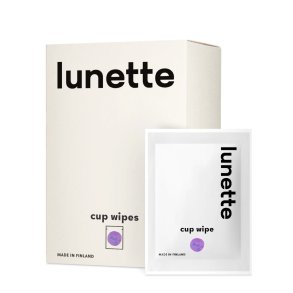
Menstrual cup wipes - 20 individually wrapped

Menstrual cup wipes - 20 individually wrapped

Lunette

LUN-60032


One sachet at a time
Most wet wipes come in a tub or pouch that must be closed after each use - and which dries out if you forget. Here, each wipe is in its own sealed sachet.

In practice, this means you can put two or three sachets in your sports bag, in the pocket of your running jacket, or in the small compartment of your backpack and forget about them. They are wet when you need them, even six months later. This is also why they work for traveling and outdoor activities, where an opened package would otherwise be used up or dried out.

How to use them
 

  1. Wash your hands if you have the opportunity.
  2. Take the cup out and empty it.
  3. Wipe the cup with toilet paper first.
  4. Then wipe it with the wipe - both inside and out, and remember the holes under the rim.
  5. Let the cup dry completely before inserting it again.
  6. Discard the wipe and sachet in the trash bin. They must not be flushed down the toilet.


Why drying must not be skipped
The alcohol must evaporate before the cup comes into contact with the mucous membrane. It typically takes less than a minute, and you can use the time to pack up or wash your hands. If you feel a stinging sensation when the cup is inserted, it was not dry. Take it out, let it finish drying, and try again.

They do not replace boiling
The wipes are a solution for on the go. The cup must still be boiled before the first use and before or after each menstruation, and rinsed with water and a mild wash at each emptying at home.

What they consist of

The wipe is viscose made from plant fibers. The liquid is 82% denatured alcohol and 18% water - no perfume, no added care ingredients. The high alcohol content makes the wipes highly flammable. They must be kept away from heat, sparks, and open flames, and stored out of reach of children.

Disposal
Used wipes and sachets belong in the residual waste. They must not be flushed down the toilet - viscose does not dissolve in the sewer and contributes to blockages.


12.20 €

Show product